
Do Soundproof Curtains Actually Work? What Miami Homeowners Need to Know
You hear it every morning. The garbage truck at 6 AM, the construction crew two blocks over, the neighbor’s dog that never sleeps. Soundproof curtains promise to fix all of that. After installing thousands of custom window treatments across Miami-Dade and Broward County over 15 years and earning 265+ five-star reviews, we can tell you exactly where these curtains deliver and where they fall short.
So do sound blocking curtains actually reduce noise? Yes. But they do not eliminate it. Understanding that difference saves you from spending money on the wrong product.
What Are Soundproof Curtains and How Do They Reduce Noise?
How Sound-Absorbing Fabrics Work
Sound travels as waves through the air. When those waves hit a dense, heavy fabric, the fibers convert some of that energy into heat through friction. That is why a lightweight sheer does almost nothing for noise, while a triple-layer velvet panel makes a noticeable difference the moment you pull it closed.
Fabric weight matters more than anything else. Acoustic curtains worth buying weigh between 1 and 2 pounds per square foot. Standard decorative curtains weigh about a third of that.
Sound Reduction vs Sound Blocking
Here is where we see the most confusion. Sound reduction means lowering the volume of noise that passes through. Sound blocking means stopping it entirely. Curtains reduce sound. Walls, windows, and insulation block it.
A quality set of acoustic curtains reduces noise by 10 to 15 decibels. A busy Miami street runs around 70 to 80 dB. Dropping 15 dB brings it down to a level where you barely notice it with the curtains closed. Real improvement. But if you live under a flight path near MIA or next to a jackhammer crew, curtains alone will not get you to silence.
NRC Ratings Explained
NRC stands for Noise Reduction Coefficient. It measures how much sound a material absorbs on a scale from 0 (reflects everything) to 1 (absorbs everything).
Standard curtain fabric sits around 0.05 to 0.15. Heavy acoustic curtains range from 0.40 to 0.80. When comparing products, NRC is the number to look at, not the marketing language on the packaging.
Which Curtain Fabrics Block the Most Noise?
Heavy Velvet and Multi-Layer Fabrics
Thermal and Blackout Fabrics
Already considering thermal curtains or blackout curtains for Miami’s sun? These fabrics pull double duty. A quality blackout curtain with a foam or felt backing drops noise by 8 to 12 dB while cutting solar heat gain by up to 33 percent, according to the U.S. Department of Energy.
That makes blackout curtains noise reduction a practical choice for bedrooms and home offices, especially west-facing rooms that take the full afternoon sun. Our guide on blackout curtains in Miami covers the light-blocking side in detail.
Mass-Loaded Vinyl (MLV) Curtains
MLV curtains contain a layer of vinyl loaded with barium sulfate or calcium silicate. NRC ratings run between 0.60 and 0.80, and they block more low-frequency noise than standard acoustic curtains.
The drawback? They look industrial. MLV works in home theaters and recording spaces. For living rooms and bedrooms, fabric curtains with double layering give you acoustic performance without sacrificing decor.
Double-Layered Curtains
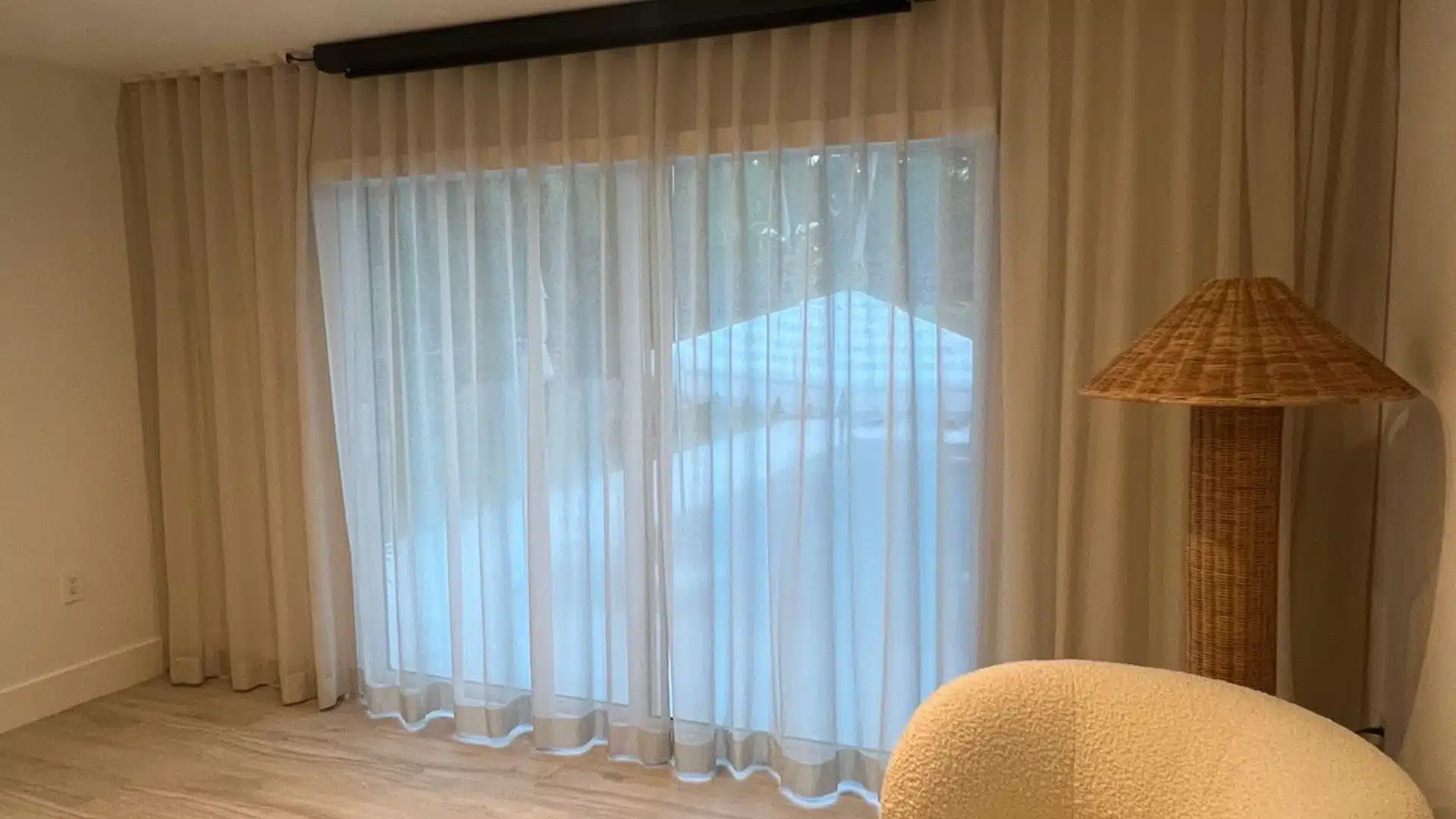
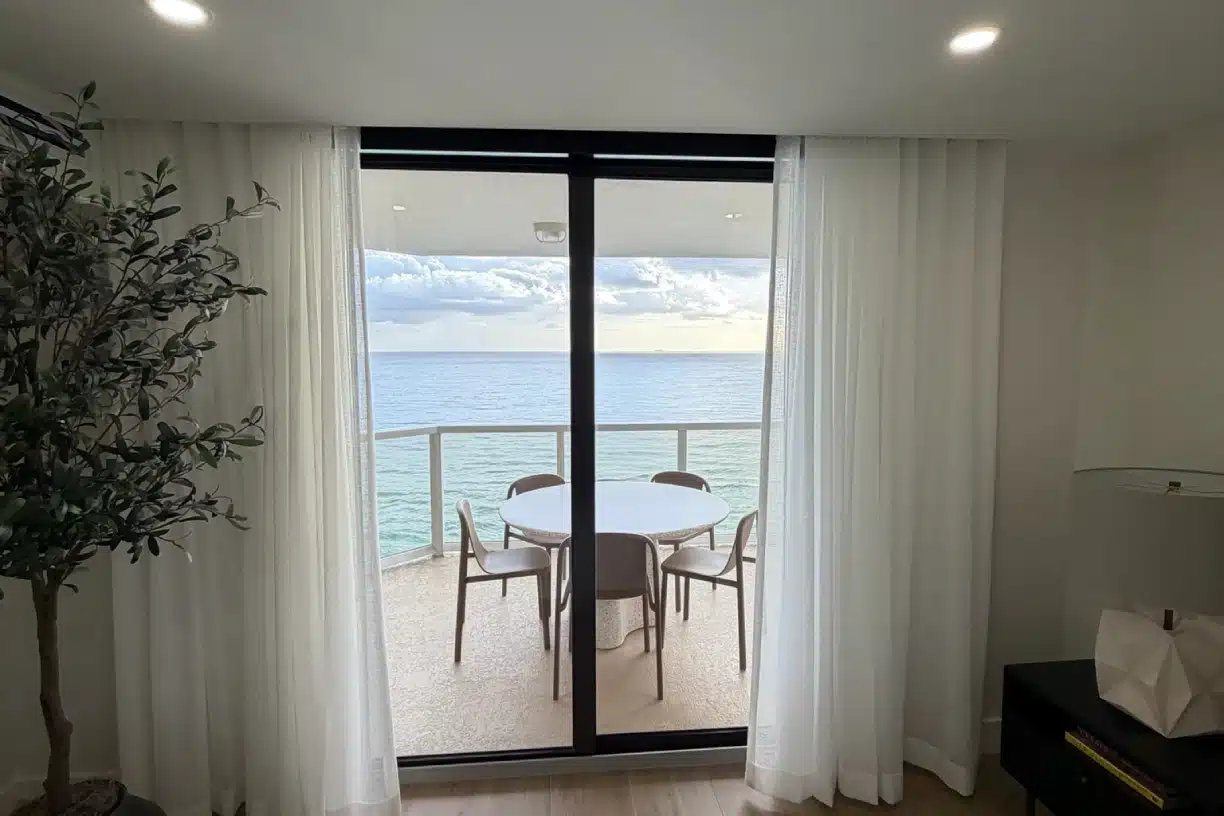
Hang a sheer curtain for light filtering closest to the window, then add a heavy drape on a second rod in front of it. The sheer diffuses light and adds a first barrier. The heavy outer layer provides mass for real sound absorption.
Double layering curtains gives you noise reduction with the flexibility to mix fabrics and textures. Open the heavy layer during the day for natural light while keeping the sheer in place.
Where Do Soundproof Curtains Make the Biggest Difference?
Street-Facing Bedrooms
Home Offices
Media Rooms
Nurseries
What Other Benefits Do Heavy Curtains Provide?
Thermal Insulation
Light Blocking
UV Protection
South Florida’s UV index runs between 8 and 11 most of the year. That fades furniture, warps hardwood floors, and degrades artwork. Heavy curtains with UV-blocking linings protect your interiors during peak sun hours. Pair them with window treatments near you for full coverage.
How Can You Maximize Sound Reduction from Curtains?
The curtain itself is only half the equation. How you install it determines whether you get 5 dB of reduction or 15.
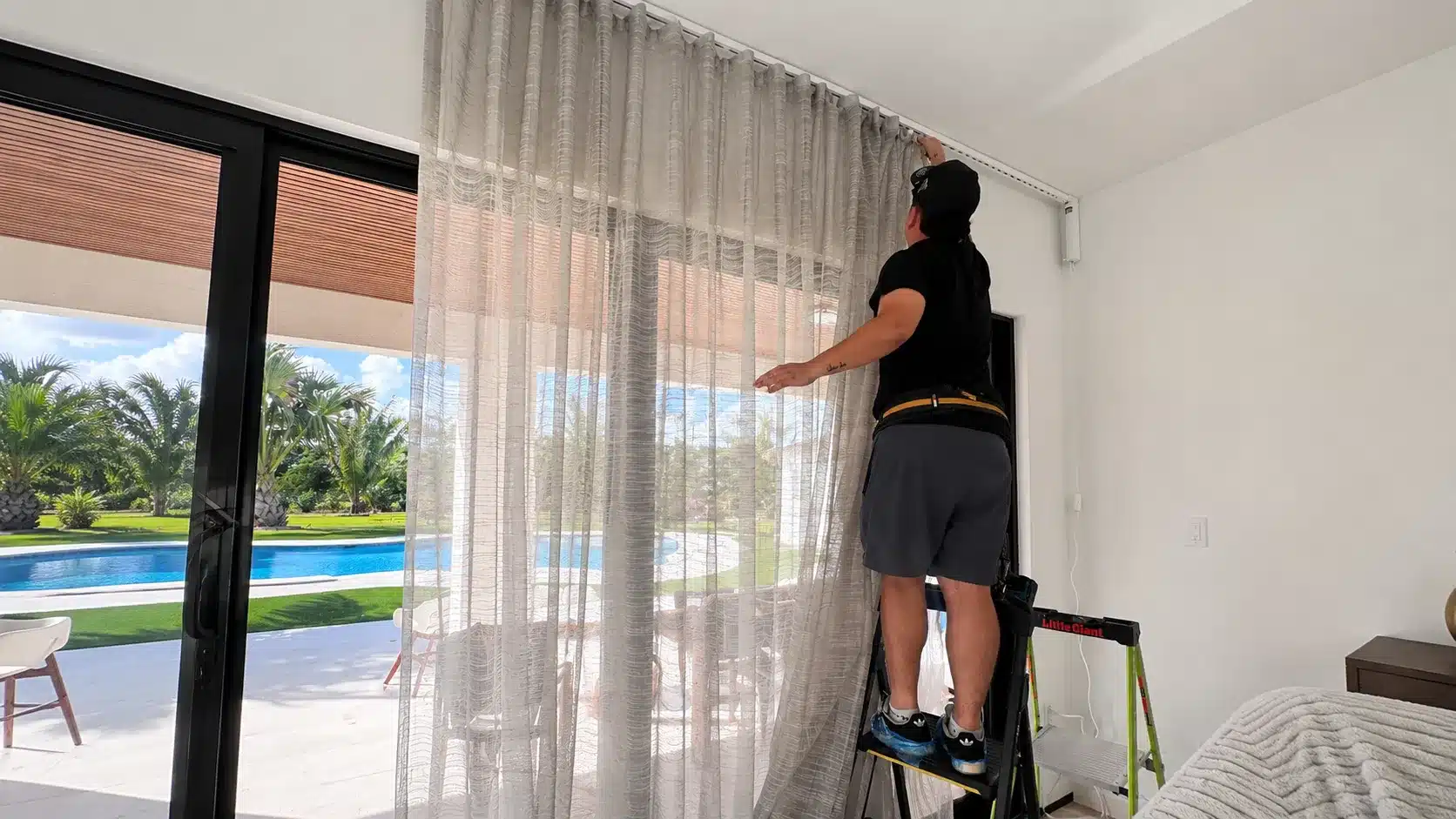
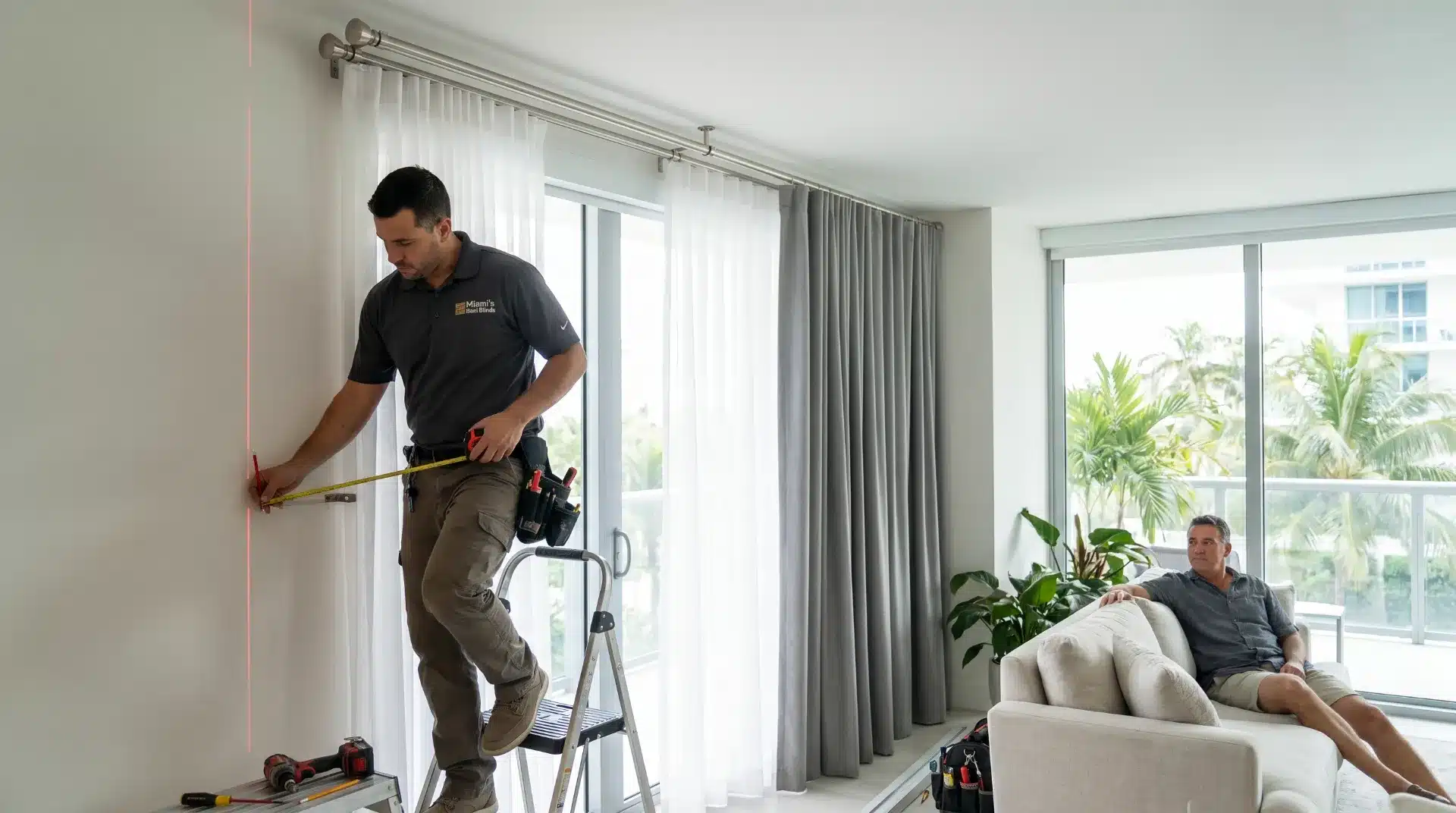
Go floor to ceiling. Sound finds gaps. A curtain that stops 6 inches short lets noise leak underneath. Mount the rod as close to the ceiling as possible and let the fabric hang to within half an inch of the floor.
Use outside mount. Choosing the right mount type matters for noise just like it matters for light. Outside mount extends the curtain 3 to 4 inches past the frame on each side, closing the gaps where sound leaks in.
Seal the top. A pelmet box or cornice above the rod traps the air gap and blocks sound from rolling over the curtain. Most overlooked detail for acoustic performance.
Double up. Pair a heavy curtain with cellular shades inside the frame for two layers of absorption plus an insulating air pocket. That combination outperforms either product alone by 3 to 5 dB.
Fill the width. Overlap the wall by at least 4 inches on each side when closed. Exposed glass edges at the sides cost you most of your noise reduction.
What Our Team Sees in the Field
We recently installed triple-layer custom drapery for a homeowner in Brickell whose condo faces I-95. The building sits less than 200 feet from the highway, and traffic noise was constant even with impact-rated hurricane windows.
We fabricated floor-to-ceiling panels with a heavyweight velvet face, dense interlining, and thermal blackout backing. Mounted on a ceiling track with a 5-inch return on each side. The homeowner called us the following week and said it was the first time in three years she could sleep with the windows uncovered.
That is what soundproof curtains do well. They did not make the condo silent. The highway is still there. But they dropped the noise to a level where it stopped being a problem.
Frequently Asked Questions
How much noise can soundproof curtains block?
Are soundproof curtains the same as blackout curtains?
Can I combine soundproof curtains with blinds or shades?
Do heavy curtains help with Miami heat and AC costs?
Talk to Us About Your Noise Situation
Every room is different. The noise source, window size, frame depth, and direction your windows face all affect which construction and installation method works. We build custom curtains in our Cutler Bay facility and install them ourselves across Miami-Dade and Broward County. No subcontractors.
Call 786-207-1617 for a free consultation. Tell us which rooms are the problem, and we will recommend the right fabric, layer count, and mounting setup. If curtains alone will not solve it, we will tell you that too.
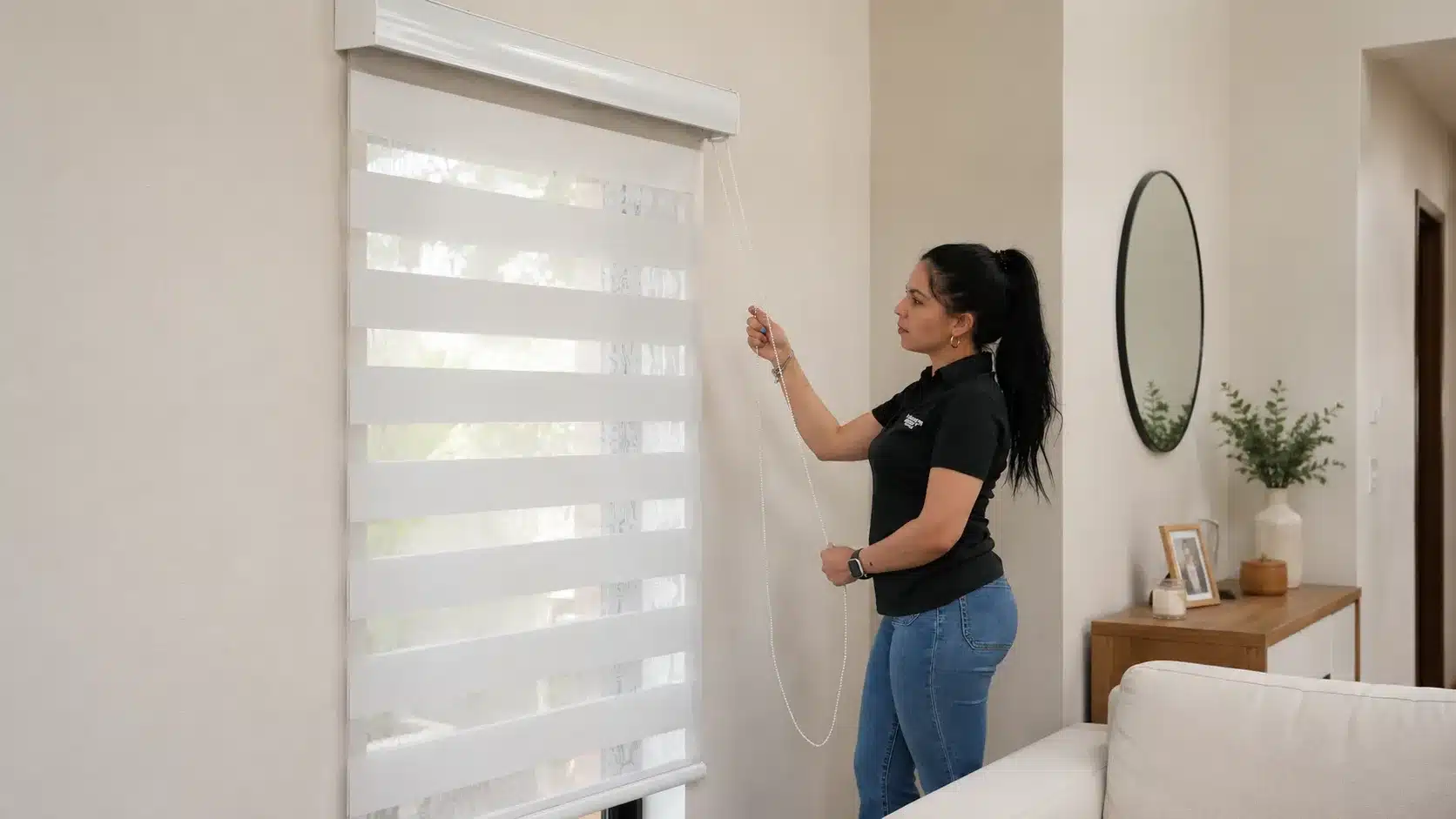
[IMAGE: A Miami’s Best Blinds team member holding up heavy curtain fabric samples in a bright showroom or client home. Professional attire. Natural South Florida light from nearby windows. Multiple fabric swatches visible in different weights and colors.