Are Motorized Blinds Worth It? A Miami Homeowner's Guide
What Are Motorized Blinds and How Do They Work?
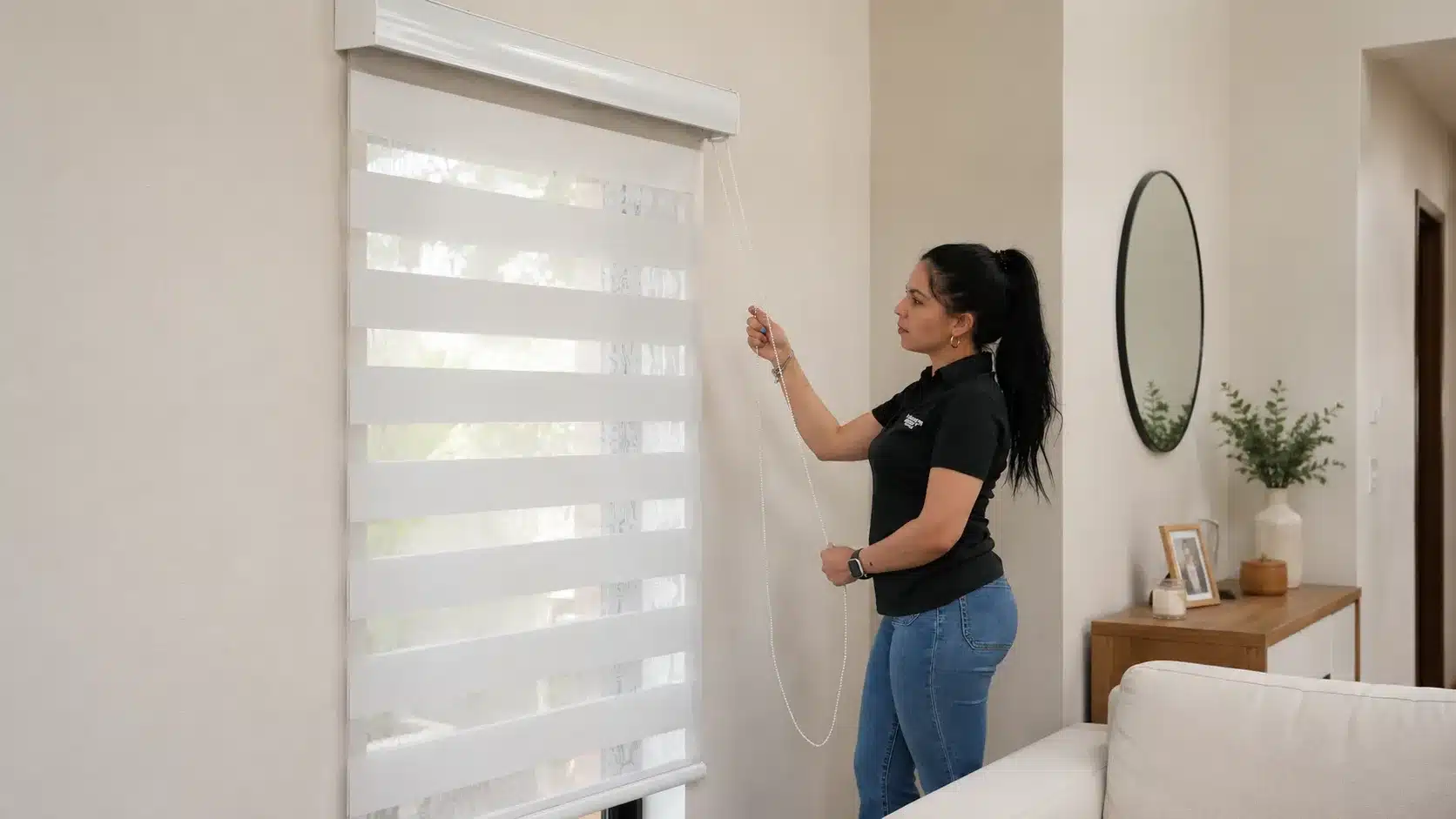
A motorized blind is a standard window treatment with a small motor built into the headrail or roller tube. Instead of pulling a cord or tilting a wand, you press a remote control, tap your phone, or tell your voice assistant to do it. Remote control blinds used to be a niche product. Now they’re standard across every major manufacturer. The blind raises, lowers, or tilts on its own. That’s the concept. Everything else is details about power source and which products support it.
How the Motor Works
The motor sits inside the roller tube or headrail, connected to a power source in one of three ways:
- Battery-powered motors run on a rechargeable lithium pack or alkaline batteries inside the headrail. No wiring needed. Battery powered blinds are the most popular retrofit option.
- Hardwired motors connect to your home’s electrical system through a low-voltage wire.
- Solar-powered motors use a small photovoltaic panel on the window frame that charges an internal battery during daylight.
All three do the same job. The difference is installation complexity and whether you want to think about batteries every year or two.
Which Products Come Motorized?
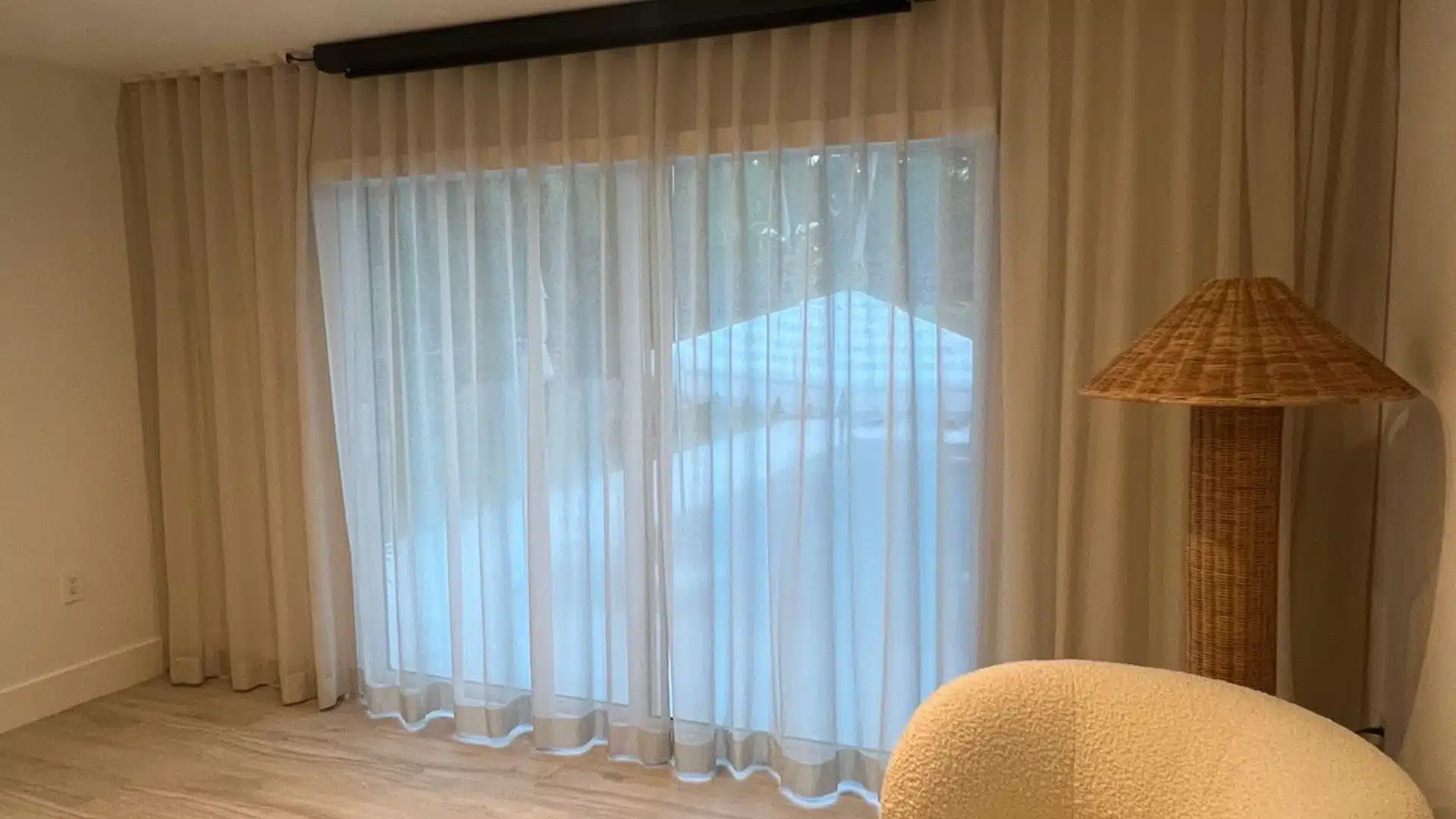
Almost every window treatment category has a motorized option now. Motorized roller shades are the most common because the tubular motor fits naturally inside the roller. Cellular shades, Roman shades, motorized curtains on track systems, and even plantation shutters can all be motorized. The smart shade motor mechanism varies by product, but the end result is the same: hands-free operation.
What Are the Benefits of Motorized Window Treatments?
Convenience and Accessibility
Windows you can’t reach become windows you can control. That Brickell high-rise with 12-foot glass? Solved. A skylight 20 feet up? Solved. But accessibility goes beyond tall windows.
For anyone with limited mobility, arthritis, or a disability, motorized blinds remove a daily physical task. No pulling, no twisting, no reaching. We’ve installed systems for elderly homeowners in Coral Gables and Pinecrest specifically because manual operation was becoming a problem they didn’t want to talk about.
Child and Pet Safety
Energy Efficiency
Home Value and Modern Appeal
How Do Smart Blinds Work with Your Home System?
Voice Control
App Control and Scheduling
Integration with Home Automation
Smart home window treatments connect with broader automation platforms. Link shades to a thermostat so they close when indoor temperature hits a threshold. Connect them to a security system so they close when you arm the alarm. Pair them with lighting scenes. The integration layer is where automated blinds stop being a window treatment and start being part of how your home runs.
Lutron and Somfy Systems
Two names matter here: Lutron and Somfy. These are the platforms we install and trust.
Lutron integrates with nearly every smart home ecosystem. Their Caseta and RadioRA 3 systems handle app control, scheduling, geofencing, and integration with lighting, HVAC, and security.
Somfy is the motor manufacturer behind many shade brands. Their myLink and TaHoma platforms provide app control, scheduling, and voice assistant compatibility. Somfy motors are engineered for quiet operation and long life.
Both platforms have been in our installations for years. The choice comes down to what else is in your smart home ecosystem.
Which Power Source Should You Choose?
Battery-Powered
Battery-powered blinds are the easiest retrofit. No electrician, no wiring. The battery pack sits inside the headrail. Swap or recharge when they run low. Installation takes minutes per window.
The trade-off: batteries run out. A rechargeable pack lasts 6 to 12 months depending on usage. High-traffic windows drain faster. Fifteen motorized shades means fifteen battery packs to monitor.
Hardwired
Hardwired motors connect to your electrical system and run indefinitely. No batteries to track, no charging cycles. The motor draws power from the wall, and you forget it exists.
The trade-off: you need wiring in the right place. New construction makes this easy. Retrofitting means running low-voltage wire through walls, which may require an electrician. If you’re renovating or building, hardwire everything. If you’re adding shades to a finished home, weigh installation cost against years of maintenance-free operation.
Solar-Powered
Solar-powered motors split the difference. A small panel on the window frame charges the motor’s internal battery. In Miami, where we average 248 sunny days a year, solar panels stay charged without effort.
One caveat: the panel needs light. North-facing windows in a shaded courtyard won’t generate enough charge. For south- and west-facing windows in South Florida, solar avoids both wiring and battery replacement.
How to Pick the Right One
Is Motorized Worth It for Your Home?
When Motorized Makes Sense
When Manual Is Fine
A single standard-height window in a guest room that you adjust once a week? Manual works. A small bathroom window with a simple cellular shade? Manual. If the window is easy to reach, the shade is light, and you don’t need it on a schedule, a quality manual shade does the job.
The honest calculation: motorization adds cost per window. If you’re only treating two or three accessible windows, the cost difference may not make sense for your situation.
Commercial Applications
Expert Insight
We’ve outfitted several Miami hotels with motorized systems that sync with their building management software. The shades respond to occupancy sensors, time-of-day schedules, and weather data. When a storm rolls in, every exterior shade in the building closes simultaneously. When a guest checks out, the shades reset for housekeeping.
On the residential side, the shift we’ve seen is families treating motorized shades the way they treat smart thermostats. Set it once, let the house run itself. A client in Coconut Grove told us last month that she forgot the shades were motorized until a guest asked how they worked.
That’s when the technology disappears into the house. At Miami’s Best Blinds, that’s what we’re building toward with every motorized installation.
Frequently Asked Questions
How long do batteries last in motorized blinds?
Can I add motorization to existing blinds? How do you motorize blinds that are already installed?
Do motorized blinds work with Alexa and Google Home?
Is motorization worth it for just one window?
Your Next Step
Figuring out which windows need motorization, which power source fits, and how it connects to your smart home is easier with someone who’s done it a few hundred times. Miami’s Best Blinds manufactures and installs motorized blinds across Miami-Dade, Broward, and Monroe counties from our Cutler Bay facility