Ceiling-Mounted Curtain Tracks: The Modern Alternative to Traditional Rods
What Are Ceiling-Mounted Curtain Tracks and How Do They Work?
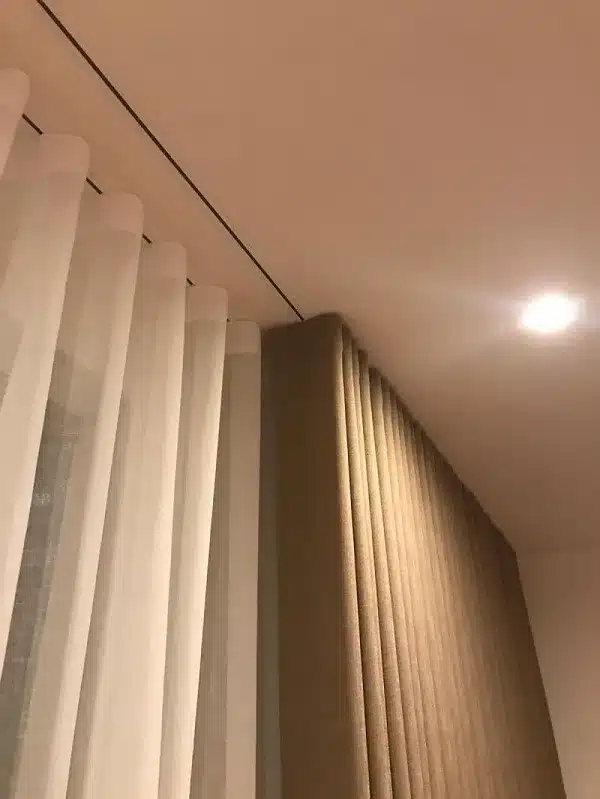
A ceiling curtain track is exactly what it sounds like. Instead of mounting a rod to the wall above your window, you install a track system directly into the ceiling. The curtain hangs from small gliders that slide inside the track channel. No rings, no brackets, no decorative finials. Just fabric and a hidden mechanism.
How They Differ from Traditional Rods
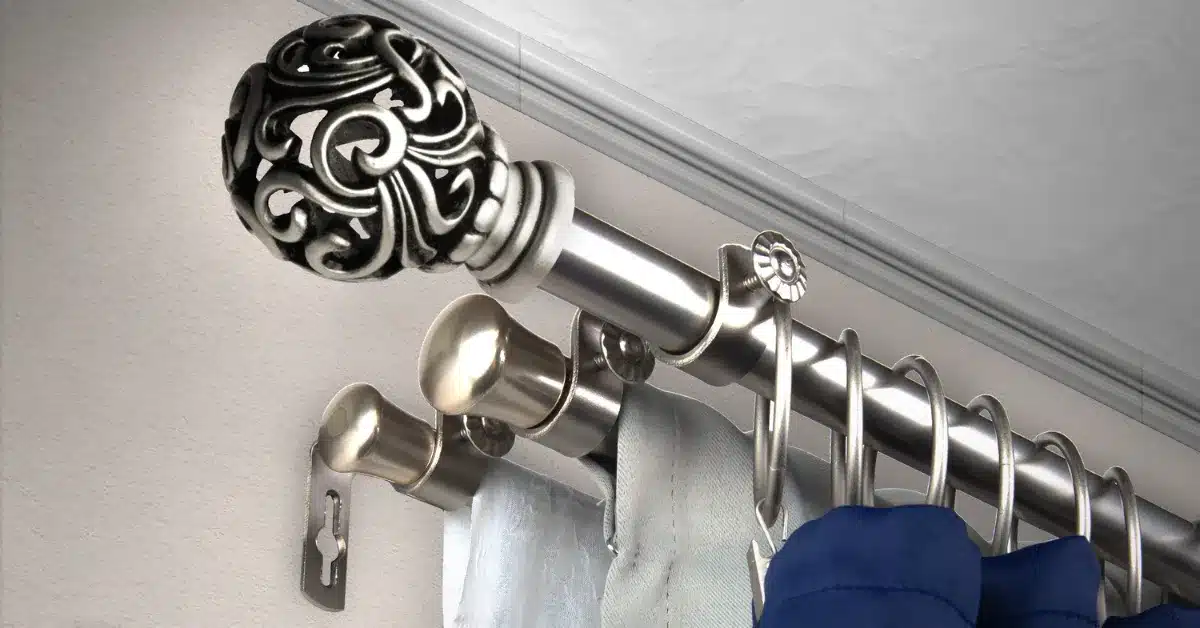
Traditional curtain rods mount to the wall, usually 4 to 6 inches above the window frame. They’re visible, they require brackets every few feet, and they limit how far the curtain can travel. A ceiling mount curtain rod (or more accurately, a track) attaches flush to the ceiling surface. The hardware disappears. The panels glide rather than slide, which means less friction, less wear on the fabric, and smoother operation.
Here’s what people don’t think about until installation day: rods sag on long spans. Tracks don’t. A 12-foot window wall or a sliding glass door that runs the length of your living room? A ceiling-mounted track handles that span without bowing.
Track Types: Single, Double, Bendable, and Motorized
Ceiling tracks for curtains come in four main configurations:
- Single track handles one layer of fabric. Good for a sheer panel or a blackout curtain, but not both at once.
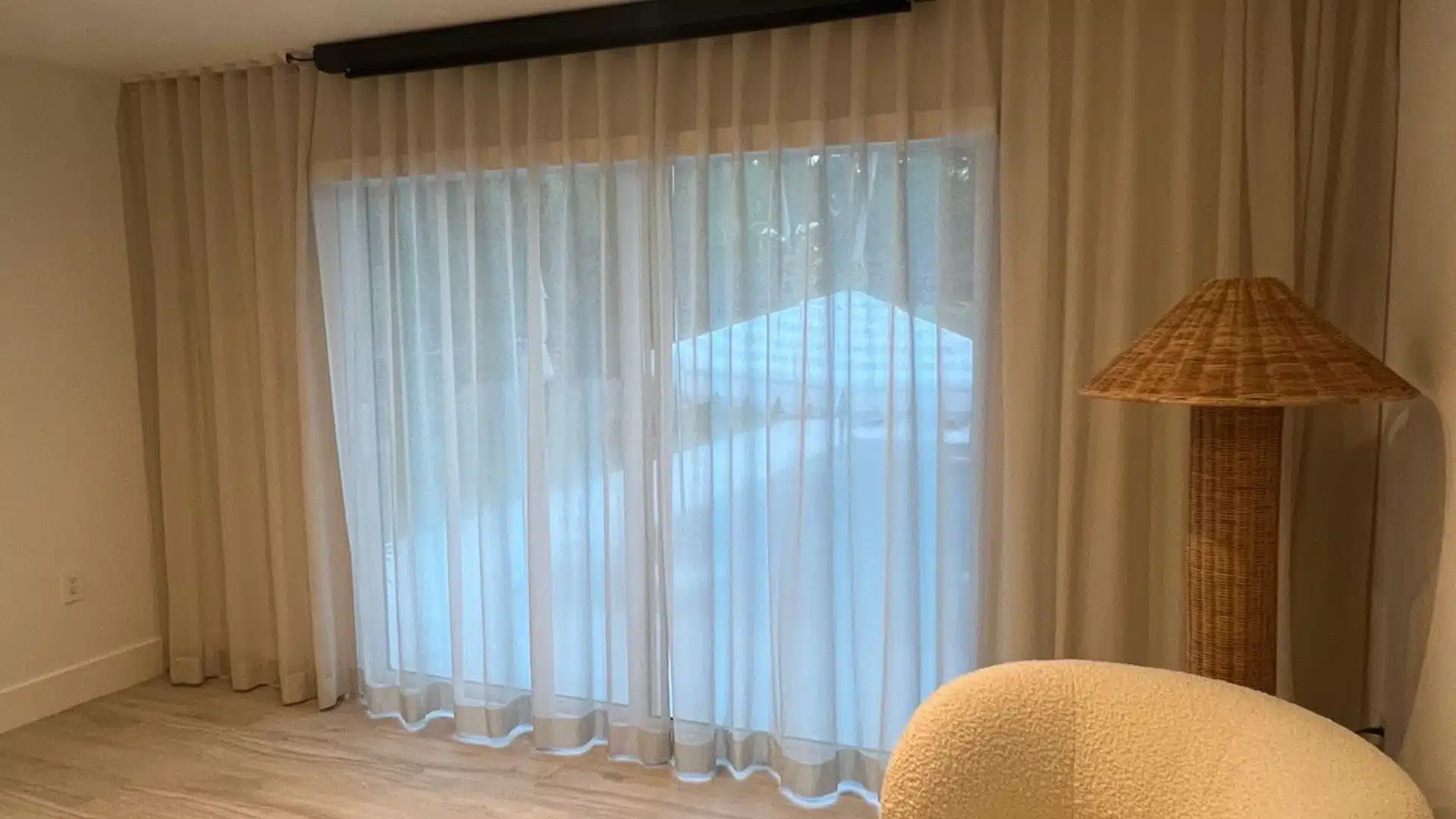
- Double track runs two parallel channels so you can layer a sheer behind a heavier drape. This is what most residential installations use.
- Bendable track flexes to follow curved walls, bay windows, or custom angles. The track is scored at intervals so it bends without kinking.
- Motorized track adds a motor and control system (Somfy and Lutron are the two names worth knowing). You open and close the curtains with a remote, a wall switch, or your phone.
All four types mount the same way. The difference is in what the track can do once it’s up there.
What Are the Benefits of Ceiling Track Systems?
Visually Elongates the Room
When curtains start at the ceiling instead of a few inches above the window, the eye reads the room as taller. The unbroken vertical line from ceiling to floor stretches the proportions of the wall. In a standard 9-foot ceiling condo, the shift is noticeable. In a 10- or 11-foot unit with floor-to-ceiling glass, it’s dramatic.
This is why ceiling curtain rails have become the default in new construction across Brickell, Edgewater, and Sunny Isles.
Handles Heavy Fabrics and Long Spans
Wall-mounted rods rely on bracket tension. Add a heavy velvet panel or a blackout-lined drape, and the rod bows or pulls away from the wall. Ceiling tracks distribute weight along the entire channel. A properly installed aluminum track handles 50 to 80 pounds of fabric across a 15-foot span without flex.
That matters for commercial spaces too. Hotel corridors, conference room dividers, restaurant partitions. Ceiling tracks hold up under that load.
Smooth, Quiet Operation (Especially Motorized)
Rod-and-ring systems create friction. Every ring scrapes against the rod surface when you pull the curtain. Track gliders roll inside a channel, so friction is minimal from day one and stays that way.
Add a motorized system and the operation becomes silent. Somfy and Lutron motors are engineered for residential-quiet operation. Press a button and the curtain glides open or closed without any sound you’d notice from the couch.
Works with Unusual Window Shapes
Bay windows. Curved walls. L-shaped corners. Angled glass in a loft conversion. Try bending a curtain rod around any of those. You can’t, not without visible joints and awkward gaps. A bendable ceiling track follows the contour of whatever surface it’s mounted to. One continuous piece, one smooth curtain path.
In South Florida, floor-to-ceiling windows in high-rise condos often wrap around corners. Open-plan living rooms flow into balcony walls at odd angles. Ceiling tracks handle all of it.
Where Do Ceiling Tracks Work the Best?
Floor-to-Ceiling Windows
Room Dividers and Loft Spaces
Ceiling tracks aren’t just for windows. In open lofts, studio apartments, and commercial spaces, curtain tracks mounted across the ceiling function as flexible room dividers. Pull the curtain closed and you have a private space. Open it and the room flows together again.
We’ve installed divider tracks in Wynwood loft conversions, Doral office suites, and hotel conference rooms across Miami-Dade. The fabric does the work of a wall without the permanence.
Bay Windows
Bay windows are where traditional curtain rod options hit a wall. The angles between panels need either multiple short rods with brackets at every joint, or a single bendable track that follows the curve. Bendable ceiling tracks wrap around a bay window in one continuous piece. The curtain glides around corners without catching or bunching. For three-panel and five-panel bays, this is the only system that works the way it should.
Sliding Glass Door Walls
Which Track Materials Hold Up in South Florida?
Aluminum Tracks (Lightweight, Modern)
Aluminum is the standard for residential ceiling tracks. Lightweight, corrosion-resistant, and strong enough for most fabric loads. Anodized aluminum resists the salt air that comes with living near the coast in Miami or the Keys. Most residential tracks we install are aluminum.
One limitation: aluminum flexes under very heavy loads. For commercial applications with dense, floor-length fabric on 20-foot spans, you’ll want something stronger.
PVC and Plastic Tracks (Budget-Friendly)
Heavy-Duty Steel Tracks (Commercial, Motorized)
Steel tracks handle commercial installations and motorized systems. The motor housing bolts directly to the track, and the steel frame supports the motor, drive mechanism, and fabric without flexing. Hospital curtain systems, stage curtains, hotel ballroom dividers: all steel.
For residential motorized installations, galvanized or powder-coated steel prevents corrosion. Non-negotiable in South Florida. Bare steel and coastal humidity end in rust.
What Should You Know Before Installing Ceiling Tracks?
Ceiling Type Matters
This is the first question we ask on every job. What’s your ceiling made of?
Drywall ceilings require toggle bolts or direct attachment to the joists. Screwing into drywall alone won’t hold. The track pulls out under fabric weight, usually within weeks.
Concrete ceilings (common in Miami high-rises) need concrete anchors drilled with a hammer drill. Stronger than drywall mounting but requires the right tools.
Drop ceilings are the trickiest. A drop ceiling curtain track can’t attach to the tiles themselves. The track mounts to the structural ceiling above with threaded rods dropping through the tile grid.
Weight Load Requirements
Before choosing a track, calculate the total weight of fabric, lining, and hardware. A single panel of lined blackout fabric weighs 8 to 12 pounds. Across a 15-foot span with two panels, gliders, and header tape, you’re looking at 30 to 50 pounds.
The track’s rated capacity needs to exceed that number by at least 25%. Overloading doesn’t cause immediate failure. It causes slow deformation: sticking gliders and uneven curtain hang over the first six months.
Motorized vs. Manual Track Systems
Expert Insight
Over the past five years, we’ve seen a major shift in what Miami homeowners and designers ask for. A decade ago, almost every drapery job was a decorative rod with rings and finials. The hardware was part of the look.
That’s flipped. Now the request is almost always “hide the hardware.” Clean lines, no visible brackets, no decorative rod. Just fabric and architecture. Ceiling-mounted tracks make that possible.
Developers in Edgewater and Brickell spec ceiling pockets (a recessed channel that hides the track completely) as a standard finish. Interior designers in Coral Gables and Coconut Grove are doing the same. The combination of hidden tracks and motorized operation has become the baseline expectation in the high-end residential market here.
Frequently Asked Questions
Can you install curtain tracks on a drop ceiling?
How much weight can a ceiling curtain track hold?
Are motorized ceiling tracks worth it?
Can ceiling tracks bend around corners or bay windows?
Your Next Step
Ceiling-mounted curtain tracks are the cleanest way to hang custom curtains in any space. Whether you’re covering floor-to-ceiling windows in a high-rise, dividing a loft, or wrapping fabric around a bay window, the right track system makes everything work.
Miami’s Best Blinds manufactures and installs ceiling track systems across Miami-Dade, Broward, and Monroe counties. Measurement through fabrication to final installation, all from our Cutler Bay facility.