Do you sometimes feel your room is too bright during the day or not private enough at night? Many people face this problem. Sunlight can make it hard to watch TV, disturb your sleep, or heat up your room. At the same time, not having enough cover can make your space feel cold and empty. Choosing the right window covering can fix these issues and make your home more comfortable.
This is where the choice of window blinds vs curtains comes in. Both are popular, both improve comfort, and both change the style of a room. But they work in different ways. In this guide, we’ll compare them step by step so you can find the best match for your home. By the end, you’ll feel more confident about which option truly fits your needs.
Window Blinds vs Curtains, Quick Comparison at a Glance
Before we dive into details, here’s a side-by-side look:
| Feature | Window Blinds | Curtains |
| Cost | Usually more affordable in ready-made sizes | Can be costly, especially custom or lined |
| Light Control | Adjustable slats for fine control | Open or closed, less flexible |
| Privacy | Good daytime privacy without blocking light | Excellent privacy at night with lining |
| Style | Modern, neat, and space-saving | Soft, elegant, and decorative |
| Maintenance | Quick dusting or wipe-down | Needs vacuuming, washing, or dry-cleaning |
| Durability | Long-lasting (faux wood, aluminum, PVC) | Depends on fabric; may fade over time |
| Best For | Kitchens, bathrooms, offices, small rooms | Bedrooms, living rooms, cozy spaces |
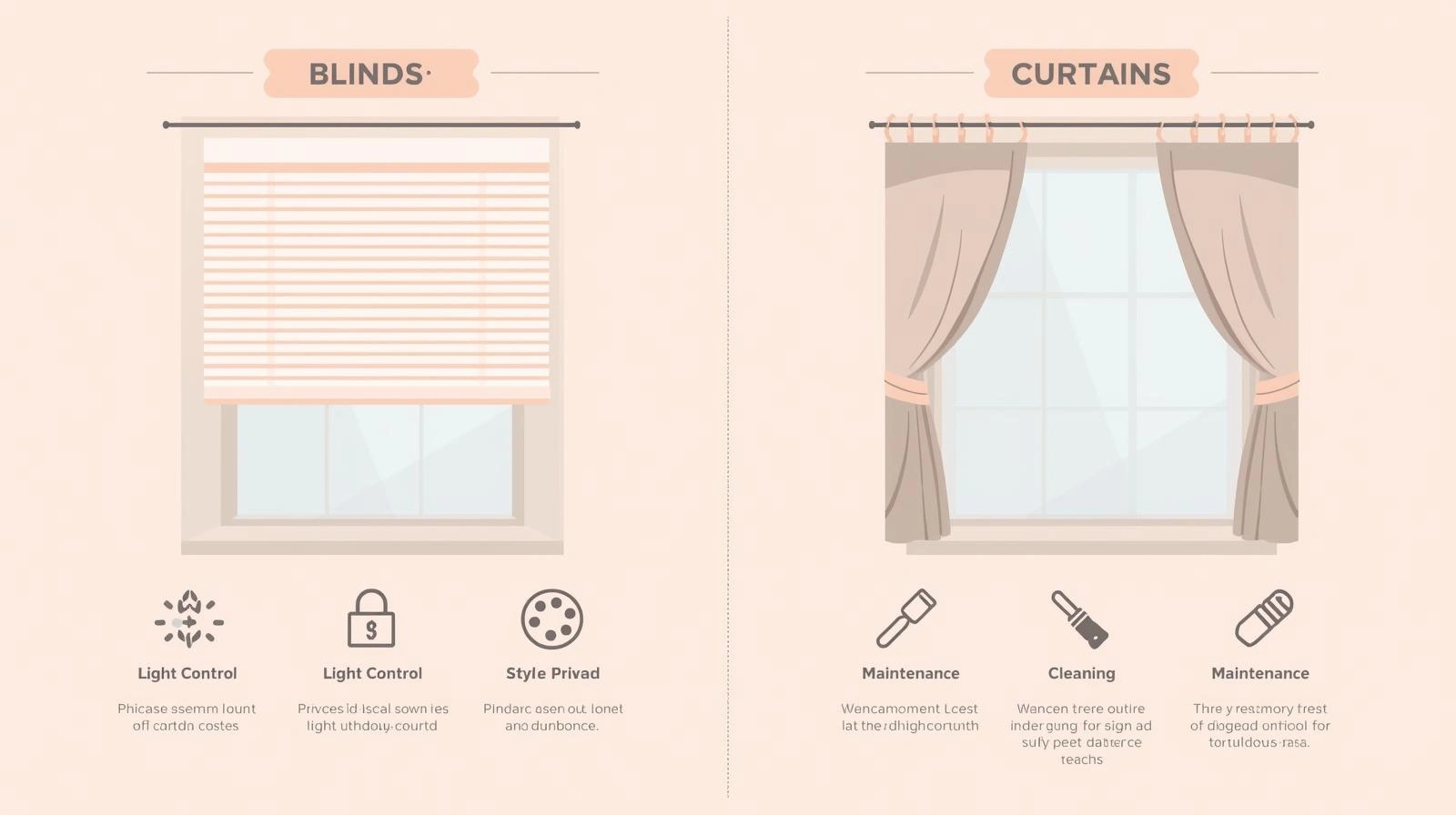
Blinds are practical and modern, while curtains are classic and cozy. Next, let’s explore what each one really is and how they work.
Understanding the Basics
What Are Window Blinds?
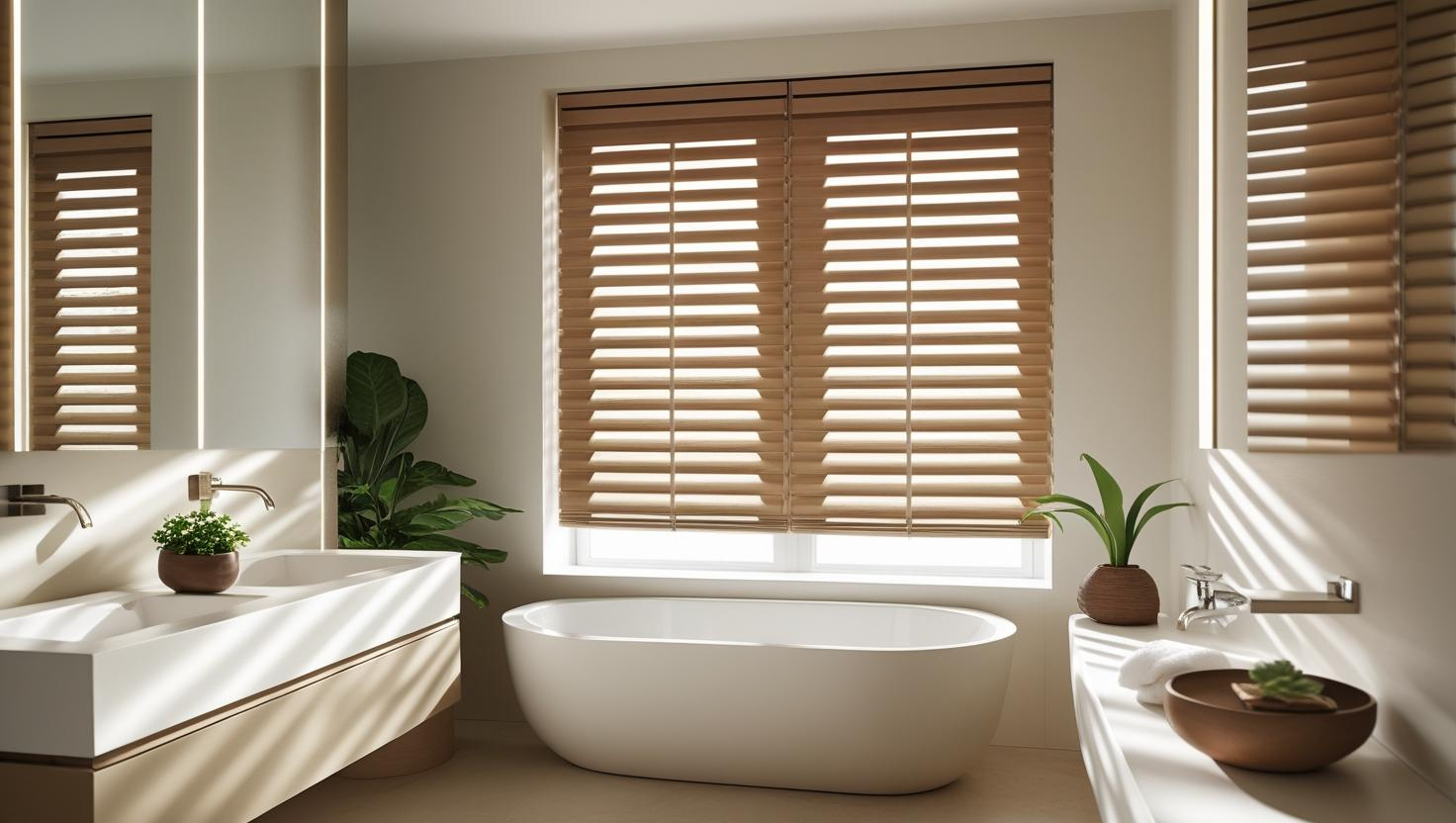
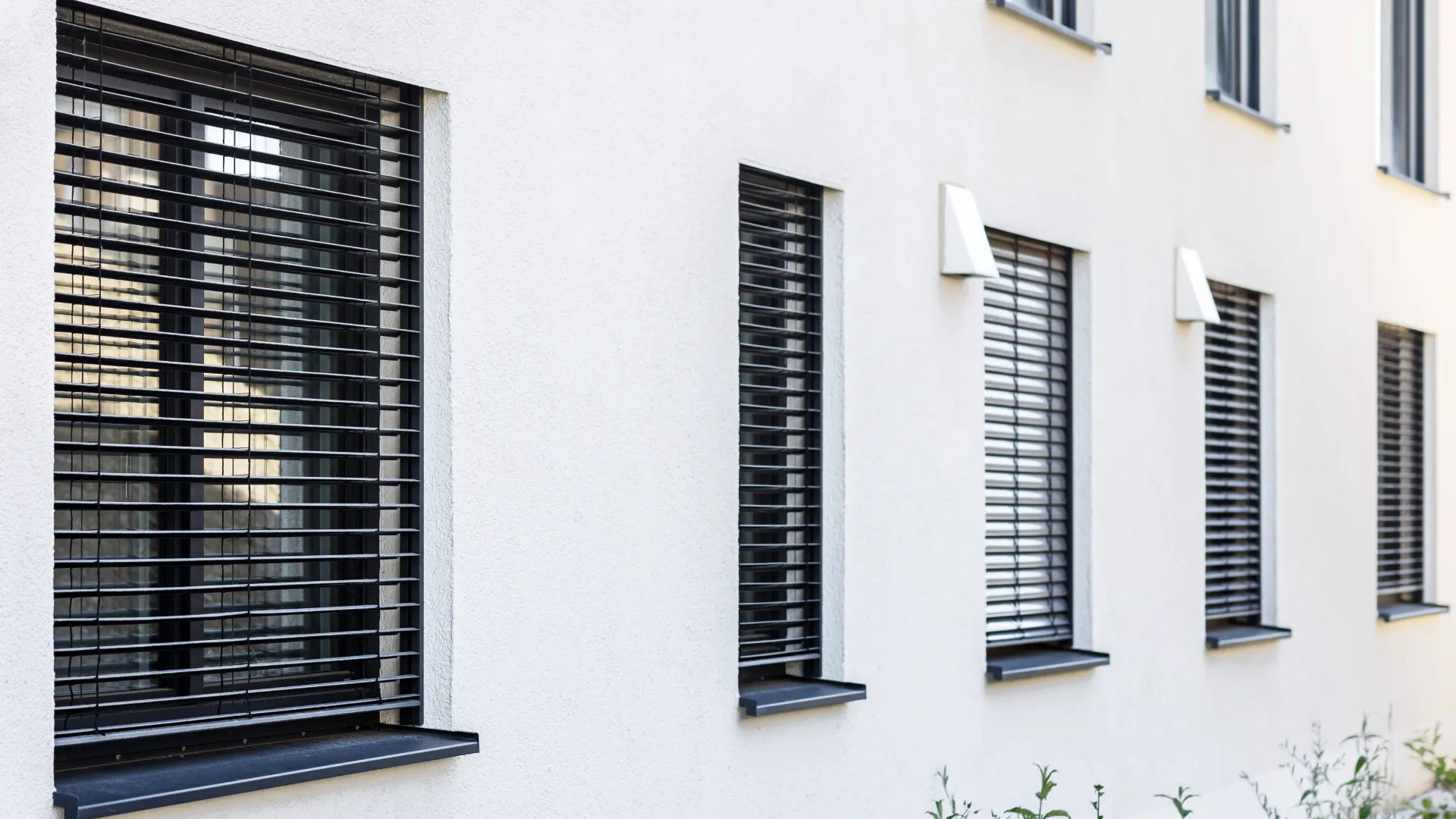
Window blinds are coverings made of horizontal or vertical slats. These salts can be tilted to let in more or less light, or lifted to open fully. They fit neatly inside the window frame, giving a clean and modern look. Common materials include wood, faux wood, aluminum, and PVC. Many modern blinds also come with motorized options for convenience.
What Are Curtains?
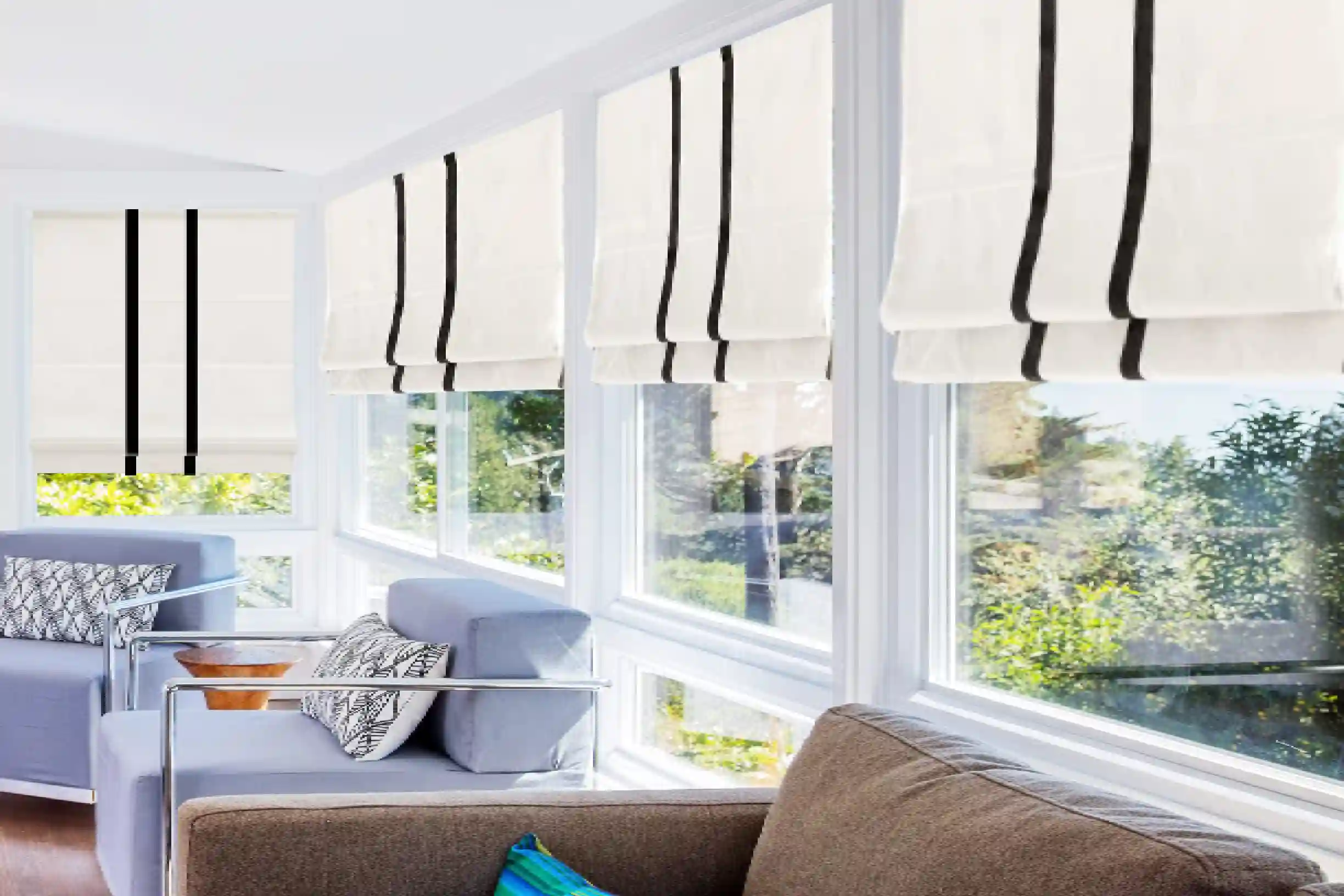
Curtains are fabric panels that hang from rods or tracks above a window. They can be light and sheer, allowing soft daylight, or thick and lined to block light completely. Curtains bring softness, texture, and style to a room. They are often chosen for spaces where comfort and elegance matter most, such as living rooms and bedrooms.
Pros and Cons of Each
Window Blinds
Pros
- Light control: Slats can be tilted to adjust brightness exactly how you want.
- Compact design: Blinds fit inside the frame, saving space and keeping a neat look.
- Affordable options: Many ready-made blinds are budget-friendly.
- Easy cleaning: A simple dusting or wipe with a cloth keeps them fresh.
- Modern upgrades: Cordless and motorized blinds add safety and convenience.
Cons
- Dust build-up: Slats attract dust and need regular cleaning.
- Not full blackout: Even when closed, some light can leak in around the edges.
- Cord risks: Traditional cords can be unsafe for kids and pets if not replaced with cordless versions.
Curtains
Pros
- Excellent blackout: Lined curtains can block nearly all outside light.
- Insulation: They help keep heat in during winter and block heat in summer.
- Stylish look: Curtains bring softness, color, and elegance to any room.
- Noise reduction: Thick fabrics can reduce outside sounds.
- Endless choice: Fabrics, patterns, and colors give you more design freedom.
Cons
- Take more space: Curtains hang outside the window frame and can feel bulky.
- Cleaning needs: They collect dust and often need washing or dry cleaning.
- Higher cost: Custom-made or heavy fabrics can be more expensive.
Features of Window Blinds and Curtains
When comparing window blinds vs curtains, it’s helpful to look at their main features one by one.
Cost
Window Blinds
Blinds are usually cheaper, especially in vinyl or aluminum. Faux wood or real wood blinds cost more, and motorized blinds are the highest price but offer great convenience.
Curtains
Curtains can be budget-friendly if you buy ready-made, but custom curtains with lining or heavy fabrics are expensive. Premium fabrics like velvet and silk add elegance but also increase costs.
Installation
Window Blinds
Blinds are quick to install about 15–20 minutes per window. Most people can do it themselves. Motorized blinds may need professional help.
Curtains
Curtains require rods, brackets, or tracks. Hanging them higher and wider makes windows look larger, but installation takes more time and effort. Heavy curtains may need strong brackets and professional installers.
Maintenance
Window Blinds
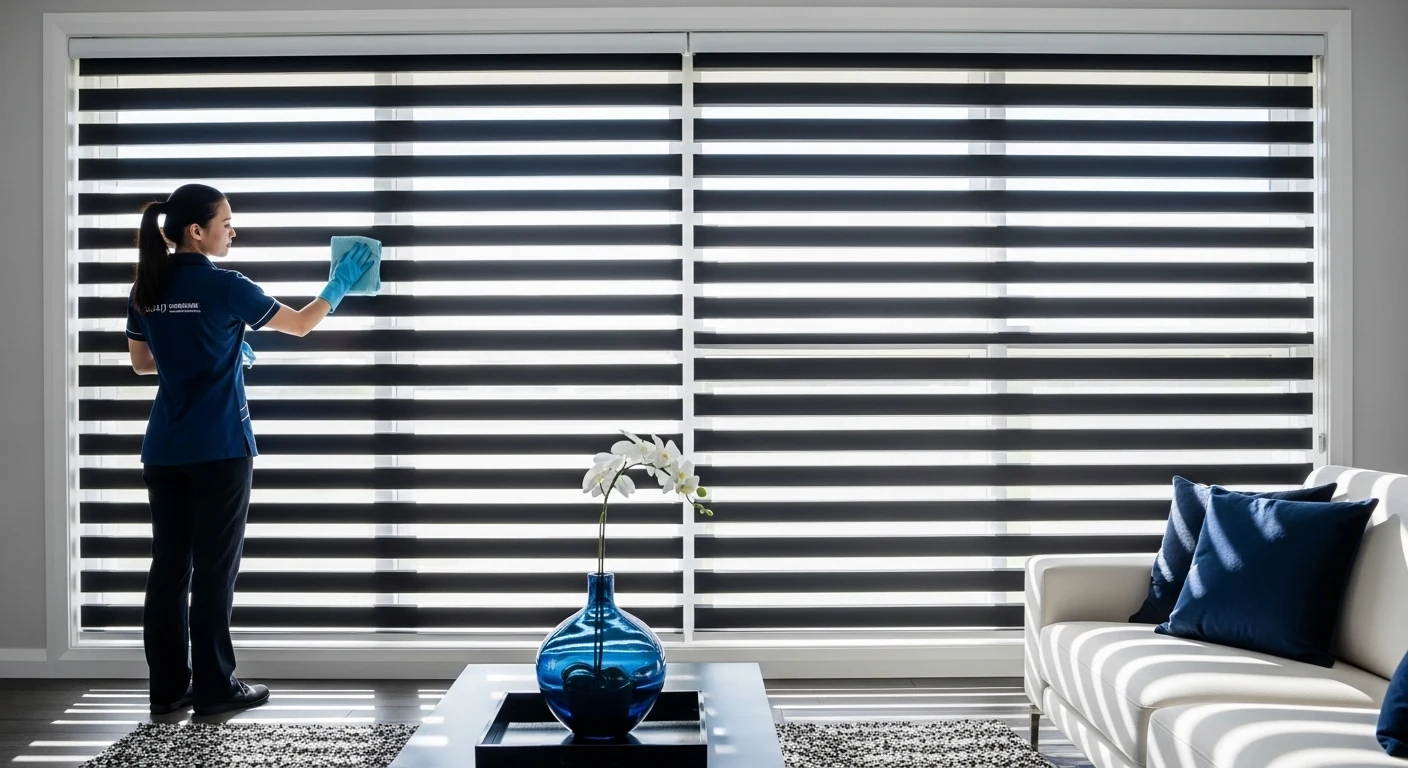
Low-maintenance , dust weekly or wipe with a damp cloth. They don’t trap much dust, making them good for allergy sufferers.
Curtains
More care required. They collect dust, so they need vacuuming or washing. Heavy, lined curtains usually require dry cleaning. Some homeowners switch curtains seasonally to refresh style.
Light Control
Window Blinds
Blinds allow precise control. Tilt the slats to reduce glare but still keep the room bright. Perfect for offices, kitchens, or living rooms.
Curtains
Curtains work like an on/off switch, open for full light, closed for darkness. Sheers soften daylight but lack fine adjustment.
Privacy
Window Blinds
Good daytime privacy. Angled slats let in light while blocking outside views. At night, however, blinds don’t always block views fully.
Curtains
Excellent for nighttime privacy. Blackout curtains stop outside views completely. Pair sheers with heavier curtains for flexibility.
Energy Efficiency
Window Blinds
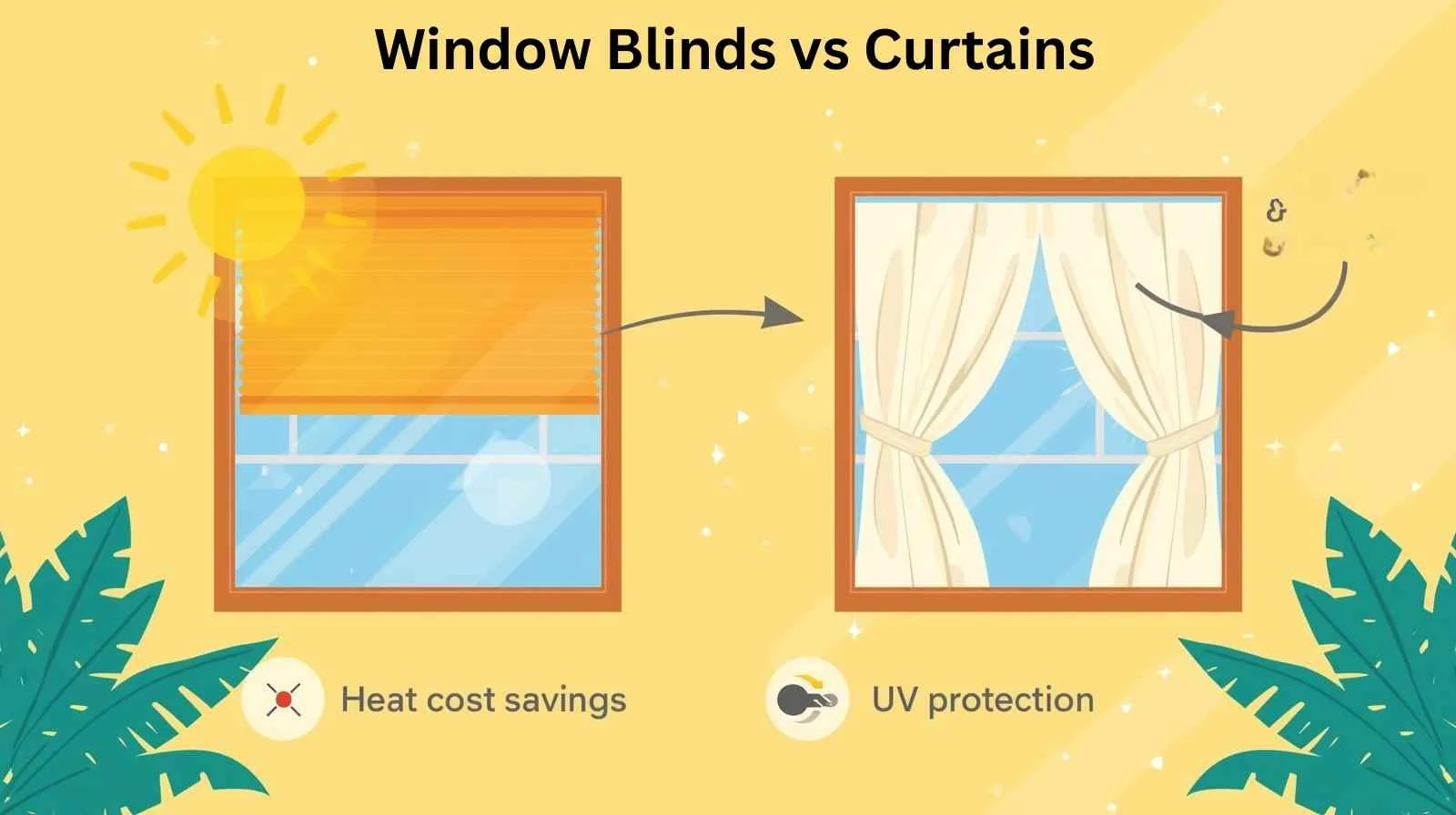
Blinds reduce glare and block direct sunlight but don’t insulate as well. Heat can pass through gaps.
Curtains
Curtains are stronger at insulation. Thick or lined curtains keep cool air in during summer and warm air in during winter. In hot places like Miami, blackout curtains can lower cooling costs.
Pro Tip: Many people layer both, blinds for daily light control and curtains for insulation and privacy.
Style and Design Choices
Blinds: Modern and Minimal
Blinds give a sleek and clean look. They fit inside the window frame, making rooms feel uncluttered.
- Finishes include wood, faux wood, aluminum, and PVC.
- Neutral shades like white, beige, and gray match most interiors.
- Best for modern or minimalist styles.
Curtains: Soft and Elegant
Curtains add warmth, softness, and luxury.
- Fabrics range from cotton and linen to velvet and silk.
- Patterns and colors are endless, from subtle neutrals to bold prints.
- Curtains can “kiss” the floor for a neat look or “pool” for drama.
- Best for living rooms and bedrooms.
Layering Both Together
- Wooden blinds with linen curtains give both privacy and softness.
- Roller blinds with blackout curtains provide light control and full darkness.
- Combining both creates a polished, designer look.
Style Tip: Hang curtains higher and wider than the frame to make ceilings look taller and windows appear larger.
Room-by-Room Recommendations
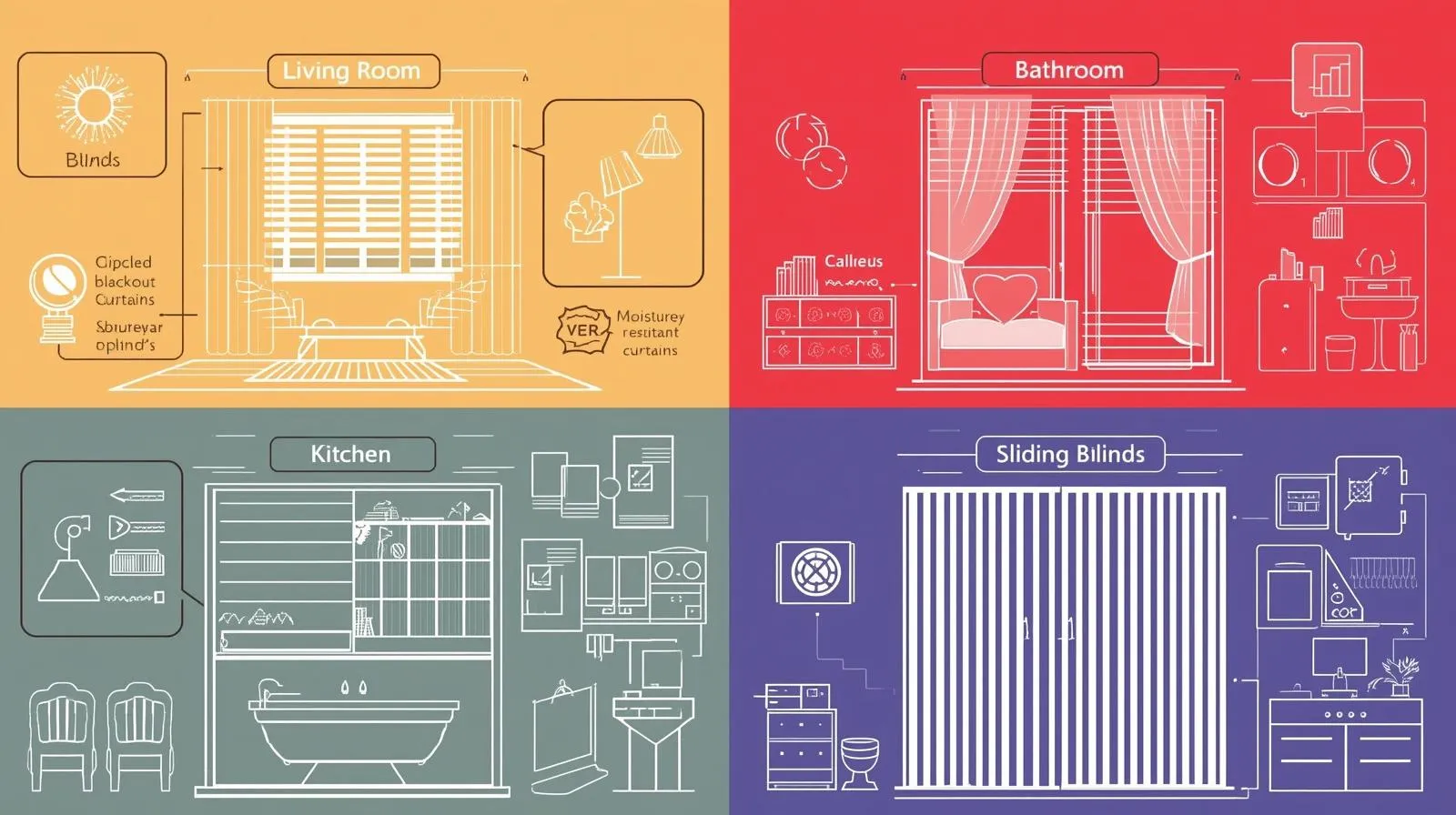
Living Room
Blinds reduce glare on screens, while curtains add softness and style. Best option: layered blinds + curtains.
Bedroom
Blinds are good for morning light; blackout curtains are best for sleep. Best option: roller or Venetian blinds with blackout curtains.
Kitchen
Blinds are easiest to clean and resist moisture. Café curtains may add charm but aren’t practical for heavy use. Best option: faux wood or aluminum blinds.
Bathroom
Privacy is key. Moisture-resistant blinds (PVC or aluminum) work best. Curtains can be used if washable. Best option: blinds for durability.
Sliding Doors and Large Windows
Vertical blinds are practical; ripple-fold curtains give elegance. Best option: depends on lifestyle, blinds for convenience, curtains for style, or both for balance.
Tip: Bedrooms need darkness, kitchens need easy cleaning, living rooms need balance. Choose based on each room’s role.
Miami-Specific Considerations
Humidity and Salt Air
- Blinds: Choose faux wood, PVC, or aluminum they won’t warp.
- Curtains: Use mildew-resistant synthetic fabrics like polyester.
Strong Sunlight
- Blinds: Solar or light-colored blinds reflect heat.
- Curtains: Blackout curtains with thermal lining block harsh sunlight and protect furniture from fading.
Energy Efficiency
- Blinds reduce glare but don’t insulate well.
- Curtains save more energy by blocking heat and keeping cool air inside.
Hurricane and Storm Season
- Blinds: Stay secure inside mounts.
- Curtains: Heavy drapes add an extra layer of protection against dust or small debris.
Tip: Many Miami homes use blinds during the day and curtains at night for maximum comfort.
Safety and Smart Features
Safety Features
- Blinds: Cordless, wand-controlled, or motorized designs prevent risks for children and pets.
- Curtains: Generally safe but must be installed securely, especially if heavy.
Smart Features
- Blinds: Motorized blinds can be controlled by remote, phone, or voice assistants like Alexa or Google Home. You can set schedules to block sun during the hottest hours.
- Curtains: Motorized tracks slide curtains open and shut with a button or app. Some can be set to open in the morning like an alarm clock.
Tip: Smart coverings save energy by adjusting automatically to sunlight and temperature.
Measuring and Mounting Basics
Measuring for Blinds
- Inside mount = clean look, inside frame.
- Outside mount = covers frame, blocks more light.
- Always measure width in three places (top, middle, bottom) and use the smallest.
Measuring for Curtains
- Hang rods higher to make ceilings look taller.
- Extend rods wider for a fuller look and to clear the window when curtains are open.
- Curtain width should be 2–2.5x the width of the window.
- Length can “kiss” the floor for a neat look or “pool” for a dramatic effect.
Mounting Basics
- Blinds: Brackets screwed into the frame or wall.
- Curtains: Rods or tracks installed into the wall with secure brackets.
Final Verdict, How to Choose
So, when it comes to window blinds vs curtains, the answer depends on your needs:
- Pick blinds if you want affordable, modern, and adjustable light control.
- Pick curtains if you want warmth, blackout, and elegance.
- Pick both if you want maximum comfort, privacy, and style.
Think about each room separately bedrooms, kitchens, living rooms and choose based on function as well as design.
Conclusion
Choosing between window blinds vs curtains doesn’t have to be difficult. Blinds are perfect if you want modern style, precise light control, and easy cleaning. Curtains are better when you need warmth, blackout, or a decorative touch. And if you want the best of both worlds, layering them together gives you comfort, flexibility, and style.
The key is to think about each room’s needs, bedrooms for darkness, kitchens for easy cleaning, living rooms for balance. Once you know what matters most, the right choice becomes clear.
At Miami’s Best Blinds, we guide homeowners through every step, from measuring to choosing the perfect design. Schedule your free consultation today and let’s create window coverings that fit your home beautifully.
FAQs:
Are blinds cheaper than curtains?
Yes, standard blinds are usually cheaper. Custom or motorized blinds can cost as much as premium curtains.
Which lasts longer?
Blinds often last longer because they’re easier to clean. Curtains may fade or wear, but lined curtains can last years.
What’s better for blackouts?
Curtains, especially blackout types, are the best for full darkness.
Can I use both together?
Yes! Many people use blinds for function and curtains for style.
Which is easier to clean?
Blinds are easier to dust or wipe. Curtains require more care like vacuuming, washing, or dry cleaning.
What’s best for large windows or sliding doors?
Vertical blinds or ripple-fold curtains both work well. Blinds give practicality, curtains give elegance.