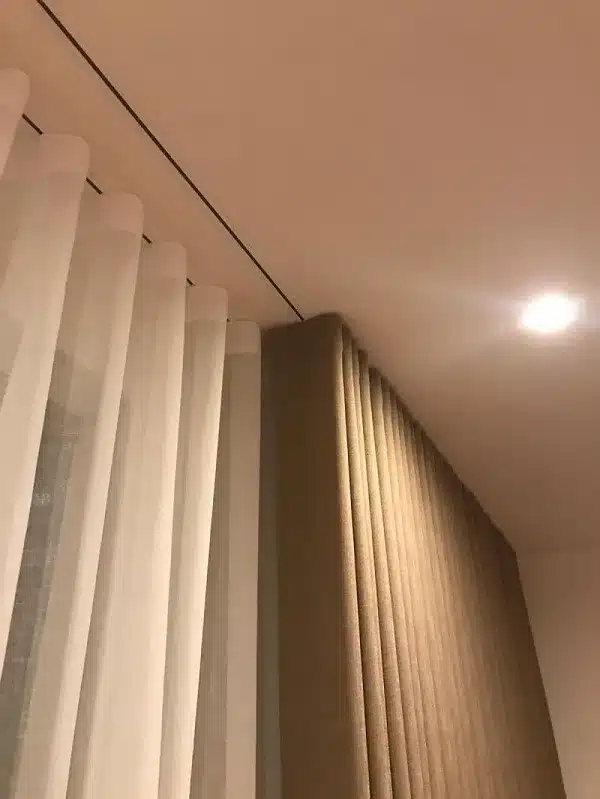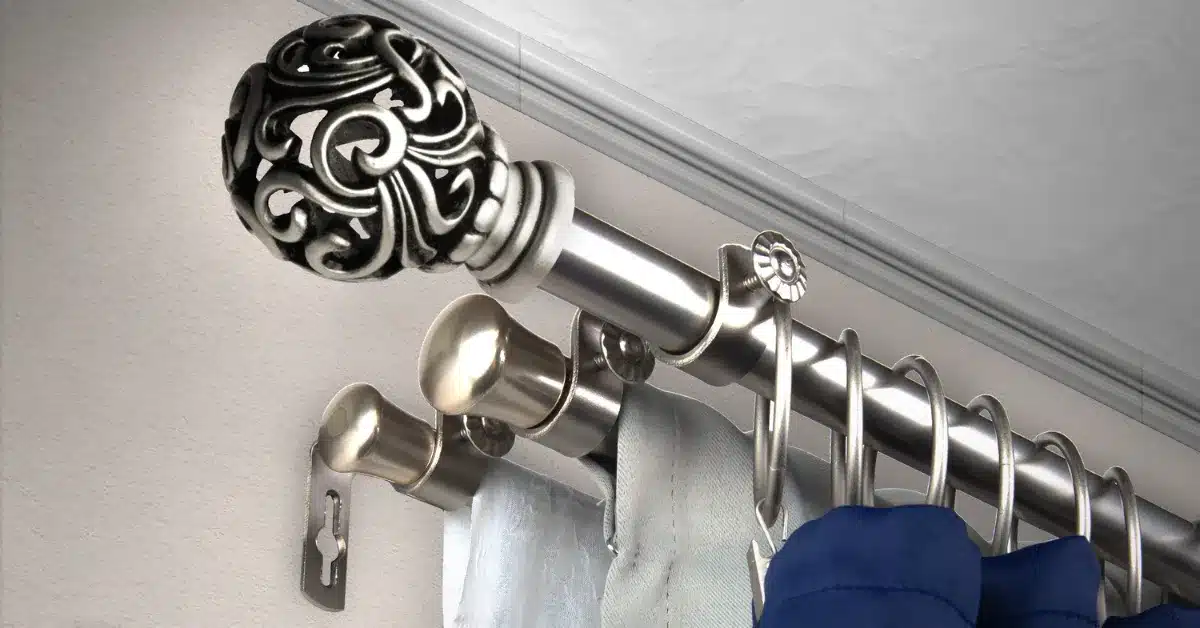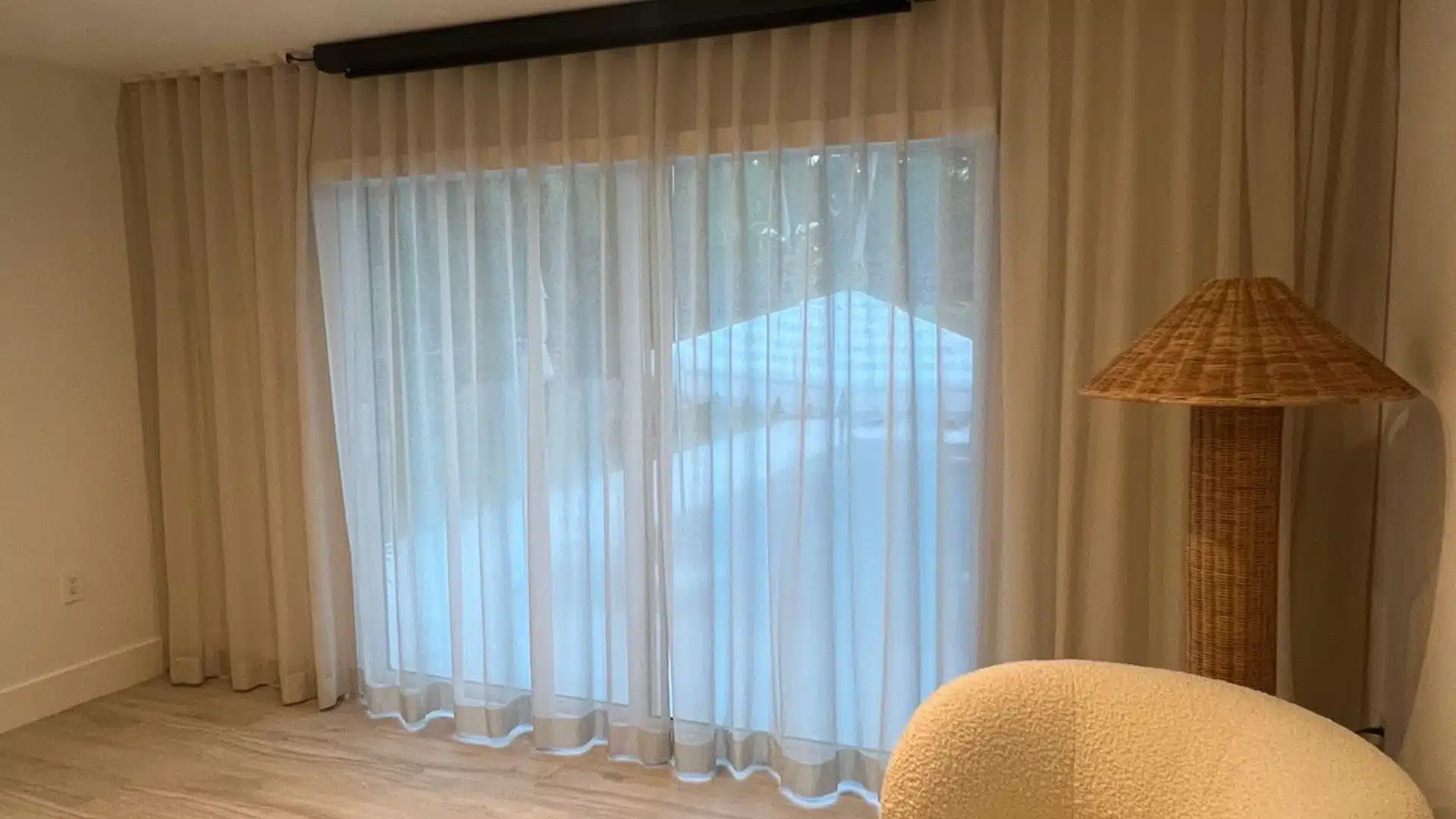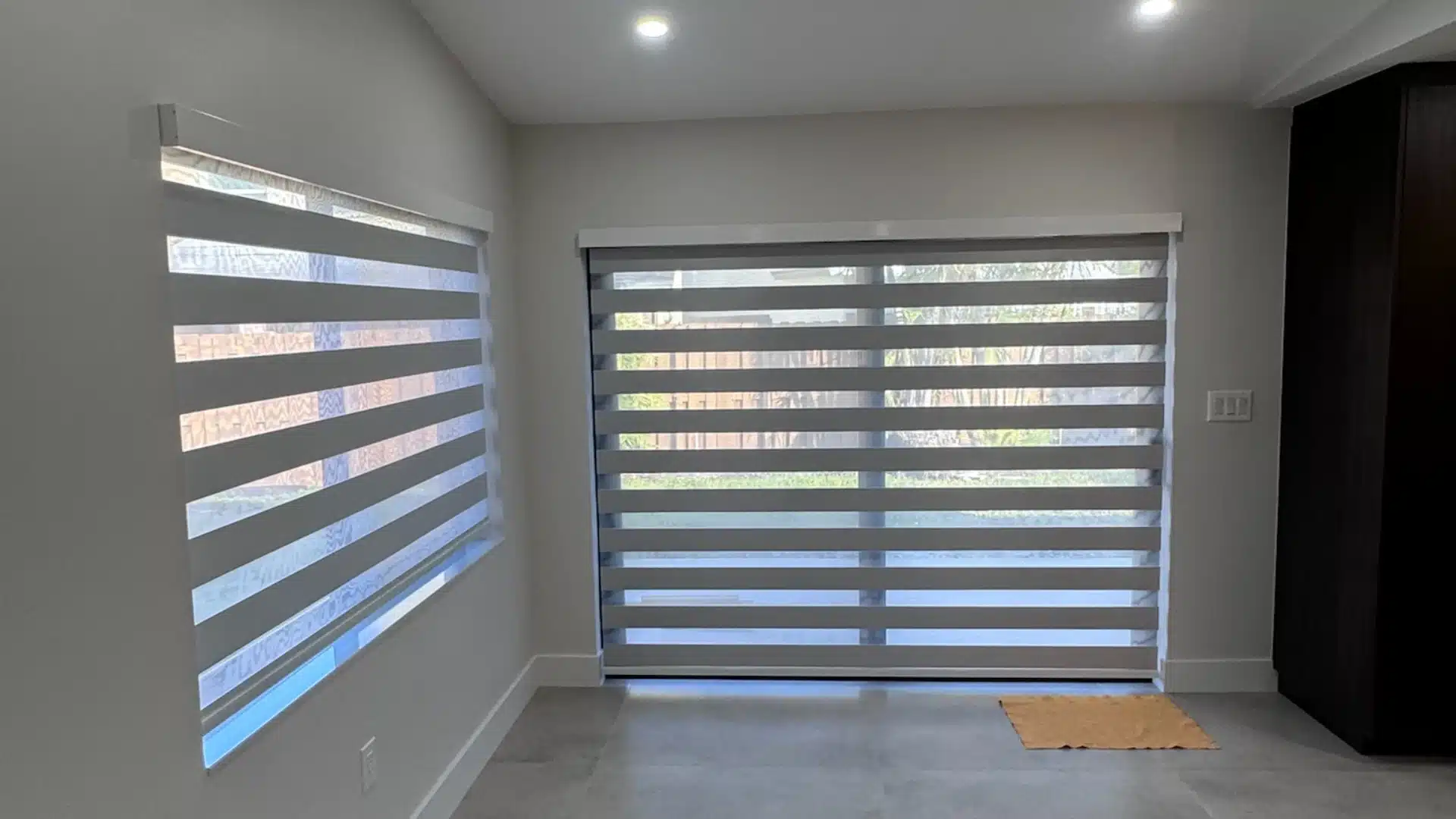
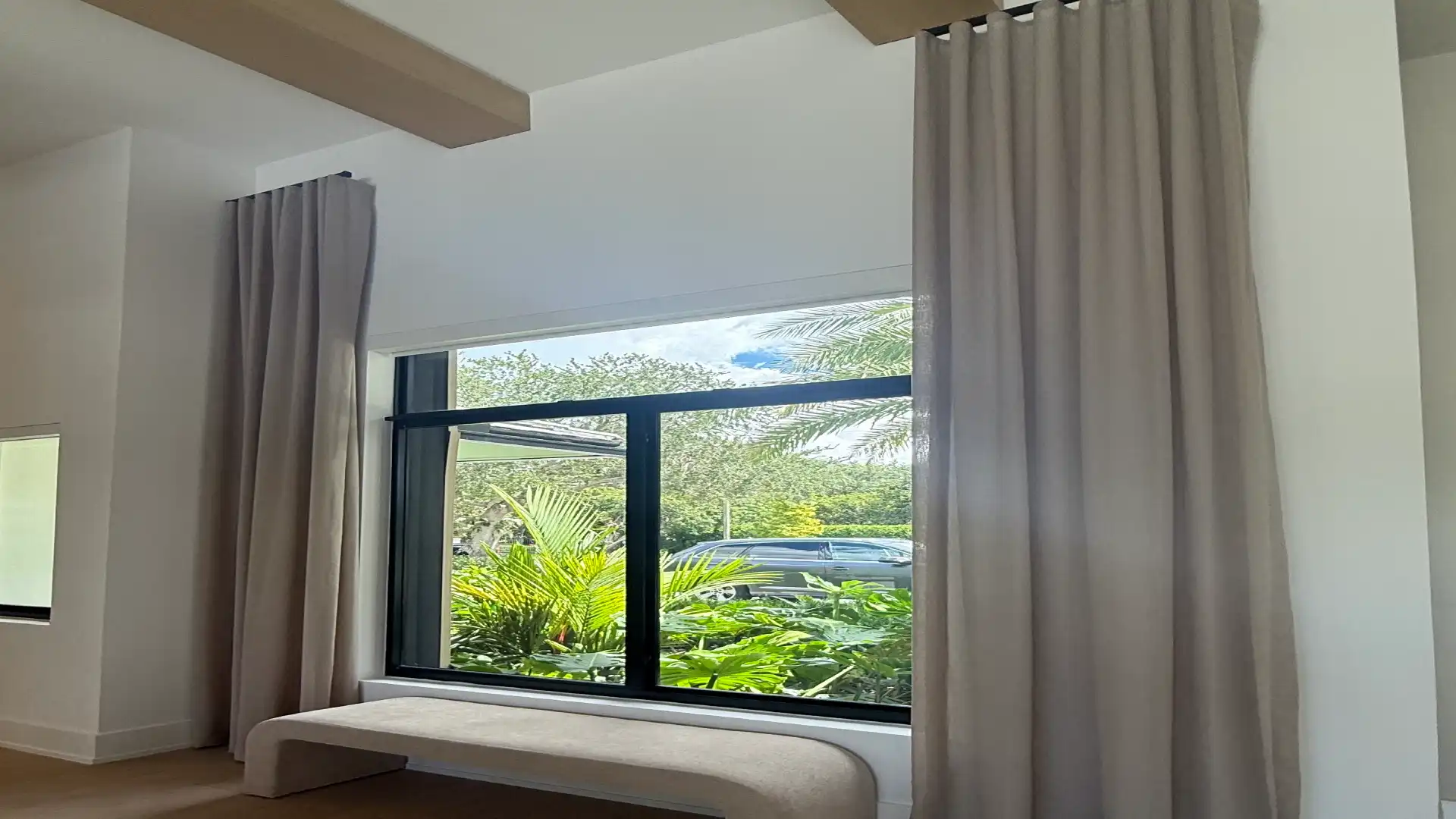
At Miami Best Blinds, we have seen this pattern over and over. People assume the fabric does all the work. It does not. The real magic often comes from proportion, structure, and the way the top of the window is framed.
What are drapes and valances for living room windows?
Drapes and valances for living room windows combine full-length fabric panels with a decorative top treatment that frames the window, softens the room, and creates a more complete design.
Drapes handle function. They manage privacy, glare, and light control. A valance handles visual structure. It gives the window a finished top line and often hides the rod, rings, or track.
That sounds simple. It is. But simple does not mean minor.
When a window looks unfinished, the whole room feels unfinished. We say this often because it keeps proving true on real jobs.
If you already have custom window treatments, a valance can be the upgrade that finally makes the room feel intentional. If you are starting from scratch, it can help you avoid expensive trial and error.
Why do so many living rooms still look unfinished after new curtains?
Here is what nobody tells you. Many living rooms do not have a curtain problem. They have a framing problem.
Homeowners usually focus on fabric color first. Then they think about blackout versus light filtering. After that, they choose rod finish. Those choices matter, but they are not enough. If the proportions are wrong, even premium drapes can look average.
We saw this in a 2025 project near Coral Gables. The client chose beautiful ivory drapes with a soft linen texture. The fabric quality was excellent. The install was neat. Yet the room still felt visually top-heavy. Why? The windows were wide, the ceilings were high, and the rod line felt exposed. We added a tailored drapery valance with a clean front edge. We also lifted the install height by several inches.
The results were clear:
- The ceiling looked taller
- The windows felt wider
- The room gained more depth
- The client stopped talking about replacing her furniture
That last point matters. Window treatments change how people feel about the entire room.
If you are also weighing blackout shades for glare control or light-filtering shades for softer daylight, you should think of drapes and valances as part of the same design conversation, not a separate one.
What is a drapery valance and what does it really do?
A drapery valance is a fabric treatment installed across the top of a window. It can be soft, structured, pleated, straight, tailored, or more decorative depending on the room style.
Its job is not just decoration.
A good valance does four things well:
- It hides hardware
- It frames the window opening
- It adds softness or structure
- It improves scale and proportion
The last one is the most important.
In design, the eye wants closure. When the top of a window feels exposed or weak, the room can feel visually unresolved. A valance solves that. It acts like a visual headline above the drapes.
We have also found that valances help in homes where the window casing is plain or builder-grade. Instead of staring at a basic opening, the eye sees a finished composition.
That is why a drapery valances window treatment can make a standard room look custom.
Which drapery valance styles actually work in today’s homes?
Let us be honest. Some old-school valances still look stuck in another era. Heavy swags, fussy trims, and overly formal shapes can make a living room feel dated fast. Not every valance deserves a comeback.
The drapery valance styles that still work in 2026 tend to share one thing. They have restraint.
Straight valance
Box pleat valance
Soft fold valance
Cornice-style fabric top treatment
Relaxed valance
This style feels more casual. It works best in cottage, coastal, or airy family spaces. It can go wrong quickly if the fabric looks cheap.
One strong opinion from our team: the best valance is often simpler than what most catalogs try to sell you. Over-designed top treatments usually age badly. Clean lines age better.
If your home leans modern, pair a simple valance with roller shades or zebra blinds underneath. The layered result often feels smarter and more current.
Should you always choose drapery with valance for a living room?
No. And that answer surprises people.
A drapery with valance is not always the right move. In some rooms, it is exactly what creates balance. In others, it adds visual bulk.
Use a valance when:
- The ceiling is high and the window needs stronger framing
- The rod or hardware feels distracting
- The room needs softness or architectural presence
- The furniture is substantial and the window treatment needs equal weight
Skip the valance when:
- The room is very small
- The style is ultra-minimal
- The window already has strong trim detail
- The drapes are already heavy and visually dominant
We learned this the hard way on a project in early 2024. A client wanted a rich, layered look in a compact condo living room. We tested a more decorative top treatment and immediately knew it was wrong. The room shrank. The windows felt crowded. We removed the valance and switched to cleaner drapes with better fullness. The room opened up.
That job reminded us of something we now tell clients often. More design is not always better design.
Are drapes and valances window treatments better than curtains alone?
Usually, yes. But not for every goal.
Curtains alone can look beautiful. We use them often. Yet drapes and valances window treatments offer advantages that plain curtain panels cannot always match.
Here is the simplest comparison:
Feature | Curtains Only | Drapes with Valance |
Visual finish | Good | Strong |
Hidden hardware | Limited | Excellent |
Design depth | Moderate | High |
Formality level | Lower | Flexible |
Luxury feel | Depends on fabric | Usually higher |
Ability to shape the window | Limited | Strong |
If you want a living room to feel finished, layered, and professionally designed, drapes with a valance usually win.
If you want a lighter, simpler, more casual look, curtains alone may be enough.
There is also a practical angle here. In bright South Florida rooms, we often combine drapes with motorized blinds or solar shades. That gives homeowners privacy and glare control during the day, with a softer decorative finish in the evening.
What fabrics work best for drapes with valance for living room spaces?
Fabric changes everything.
A great style in the wrong fabric can fall flat. A simple style in the right fabric can look custom and expensive.
Here are the materials we trust most.
Linen and linen blends
Cotton blends
Velvet
Polyester performance fabrics
Sheer layering fabrics
These work well when paired behind decorative drapes. They are especially useful in bright rooms that need filtered light without losing softness.
Our team once corrected a failed install where the homeowner bought online velvet-look panels that photographed well but looked stiff in person. They fought the folds, reflected light oddly, and made the valance look bulky. We swapped them for a linen blend. The room immediately felt more refined.
That is one reason we still prefer seeing fabric samples in person.
What do drapes valances window treatments cost in 2026?
Pricing ranges a lot. Size, lining, hardware, labor, fabric grade, and custom details all affect the final number.
Here is a realistic range based on what we see in the market as of 2026.
Ready-made drapes
- $80 to $250 per panel
Better quality ready-made panels
- $250 to $500 per pair
Custom drapes
- $700 to $2,500 per window
Simple valance
- $150 to $450
Custom tailored valance
- $400 to $1,200
Premium hardware
- $150 to $800 per window
Professional installation
- $150 to $500 depending on complexity
Brands we often review with clients include Hunter Douglas, The Shade Store, Pottery Barn, West Elm, IKEA, Wayfair, Kirsch, Rowley, Somfy, and Forest Drapery Hardware. Each has strengths and weaknesses.
- Hunter Douglas offers strong systems and premium engineering, but pricing climbs quickly.
- The Shade Store looks polished and consistent, but many homeowners feel the premium.
- Pottery Barn works well for classic styles, though custom flexibility is limited.
- West Elm suits cleaner modern rooms, but not every fabric feels as premium as it looks online.
- IKEA gives strong value for simple setups, though hardware and tailoring are limited.
- Wayfair offers variety, but quality control can be uneven.
- Kirsch remains dependable for hardware.
- Rowley gives decorators more specialized options.
- Somfy is excellent when motorization enters the conversation.
- Forest Drapery Hardware performs well for smoother track systems.
Our honest take? Spend less on trend-driven fabric and more on proportion, fullness, and hardware quality. That is where the visual value lives.
What common mistakes ruin a drapery valances window treatment?
We see the same mistakes again and again.
Hanging everything too low
This is the fastest way to shorten a room. Mounting closer to the ceiling usually gives a better result.
Using a valance that is too narrow
A narrow valance makes the whole window look smaller. Width matters.
Choosing cheap fabric with too much sheen
This often looks fine online and disappointing in real life.
Ignoring fullness
Flat panels rarely look luxurious. Good drapery needs body.
We see the same mistakes again and again.
Hanging everything too low
This is the fastest way to shorten a room. Mounting closer to the ceiling usually gives a better result.
Using a valance that is too narrow
A narrow valance makes the whole window look smaller. Width matters.
Choosing cheap fabric with too much sheen
This often looks fine online and disappointing in real life.
Ignoring fullness
Flat panels rarely look luxurious. Good drapery needs body.
Letting the valance fight the room
The valance should support the room. It should not scream for attention.
One client told us, “I thought heavier meant richer.” We hear that a lot. In reality, heavier often means clumsier unless the room can carry it.
The valance should support the room. It should not scream for attention.
One client told us, “I thought heavier meant richer.” We hear that a lot. In reality, heavier often means clumsier unless the room can carry it.
How do you choose the right drapes and valances for your living room?
Here is the practical process we use.
1. Start with the room, not the window
Look at ceiling height, wall width, furniture scale, and light.
2. Decide the job first
Do you need privacy, glare control, softness, or a more finished design statement?
3. Choose the base layer
This might be drapes alone, shades alone, or a layered combination.
4. Decide if the top needs framing
If the rod feels exposed or the room lacks structure, a valance may help.
5. Match the style to the architecture
Tailored styles suit cleaner homes. Softer styles suit traditional spaces.
6. Test samples in the actual room
Morning light and evening light tell very different stories.
7. Think long term
A living room should still look good three years from now.
That last point matters more than ever. Trends move fast. Good proportion lasts.
If you are also considering blinds installation for better light control or layered window solutions for wider openings, it helps to plan the whole system together.
Our final take on drapes with valance for living room design
At Miami Best Blinds, we believe the best living rooms feel calm, intentional, and finished. They do not feel over-styled. They do not rely on trendy details to impress. They simply feel right.
That is exactly what the right drapes with valance for living room design can do.
A well-designed window treatment improves more than a window. It improves the way the room holds light. It improves the way furniture feels in the space. It improves the emotional tone of the room.
That may sound dramatic. It is not. We see it every week.
If you remember one thing from this guide, let it be this: the top of the window matters more than most homeowners realize.
Choose proportion over clutter. Choose quality over gimmicks. Choose a design that supports the room instead of stealing the spotlight.
That is how you create a living room that still feels beautiful long after the trend cycle moves on.
Frequently asked questions about drapes and valances for living room
Disclaimer: All pricing provided is for informational purposes only. Actual costs will vary based on specific project requirements and property conditions. Reach out to us for a free, personalized estimate.